
Inside the Myth and Reality of Venezuela’s ‘Cartel of the Suns’

Maduro and his wife, Cilia Flores in 2019


It was past midnight in Paris on September 10, 2013, when customs officers cut open cargo pallets aboard an Air France flight 3rom Caracas. Inside was 1.4 tons of pure cocaine, wrapped, stacked, and hidden in plain sight. The largest cocaine seizure in French history had arrived not in a speedboat or a jungle airstrip, but on a commercial jet. The haul raised an immediate question that investigators couldn’t shake. Just who could move this much cocaine through an international airport without help?
As French and Spanish authorities traced the route backward, the trail pointed not to street gangs or rogue pilots, but to Venezuela’s military logistics chain. Soldiers. Airfields. Checkpoints. Eight Venezuelan National Guard members would eventually be implicated. The operation, investigators concluded, could not have happened without state protection. Reporters covering the case reached for a phrase that had circulated quietly in Latin American journalism for years. It was one that already carried a reputation for danger… the Cartel of the Suns.
Just over 12 years later, in the dark of January 3, 2026, Caracas was rocked by a surprise US military operation. U.S. forces launched a nighttime strike on Venezuelan air defenses and stormed President Nicolás Maduro’s compound. In the raid, the United States captured Maduro and his wife, Cilia Flores, and flew them to New York for prosecution. At a triumphalist press conference afterwards, President Trump and his advisers openly boasted of seizing Venezuela’s oil wealth. Trump declared that America would “run” Venezuela, maintain “a presence… as it pertains to oil,” and that occupying the country “won’t cost us anything” – we’ll “sell[] large amounts of oil” to cover expenses. He bragged, “A U.S. occupation won’t cost us a penny” because the profits would come from the “money coming out of the ground,” i.e., Venezuelan oil. In other words, Washington was candid that oil was the prize.
Yet U.S. officials defended the mission as a self‑defense operation against drugs. Ambassador Mike Waltz even told Fox News that Maduro was a “drug kingpin… pumping drugs, thugs, and weapons into the United States” – effectively claiming the raid was a valid use of force against a narcotrafficker. This message reflected the U.S. “Cartel of the Suns” narrative. The Justice Department had long characterized Maduro’s regime as a “narco-terrorist” apparatus that was distributing cocaine to harm U.S. cities. In his public statements, Maduro himself labeled such claims a “U.S.-led campaign” to smear Venezuela and justify intervention. His vice president insisted America’s real aim was “regime change” and the “seizure of our energy, mineral and natural resources,” in effect, accusing the U.S. of using the drug war as a pretext for imperialism.
So, what’s the truth? Does the Cartel of the Suns really exist? Or is it a smokescreen to mask imperialism and the expansion of the forever wars into new territory?
The Birth of a Name
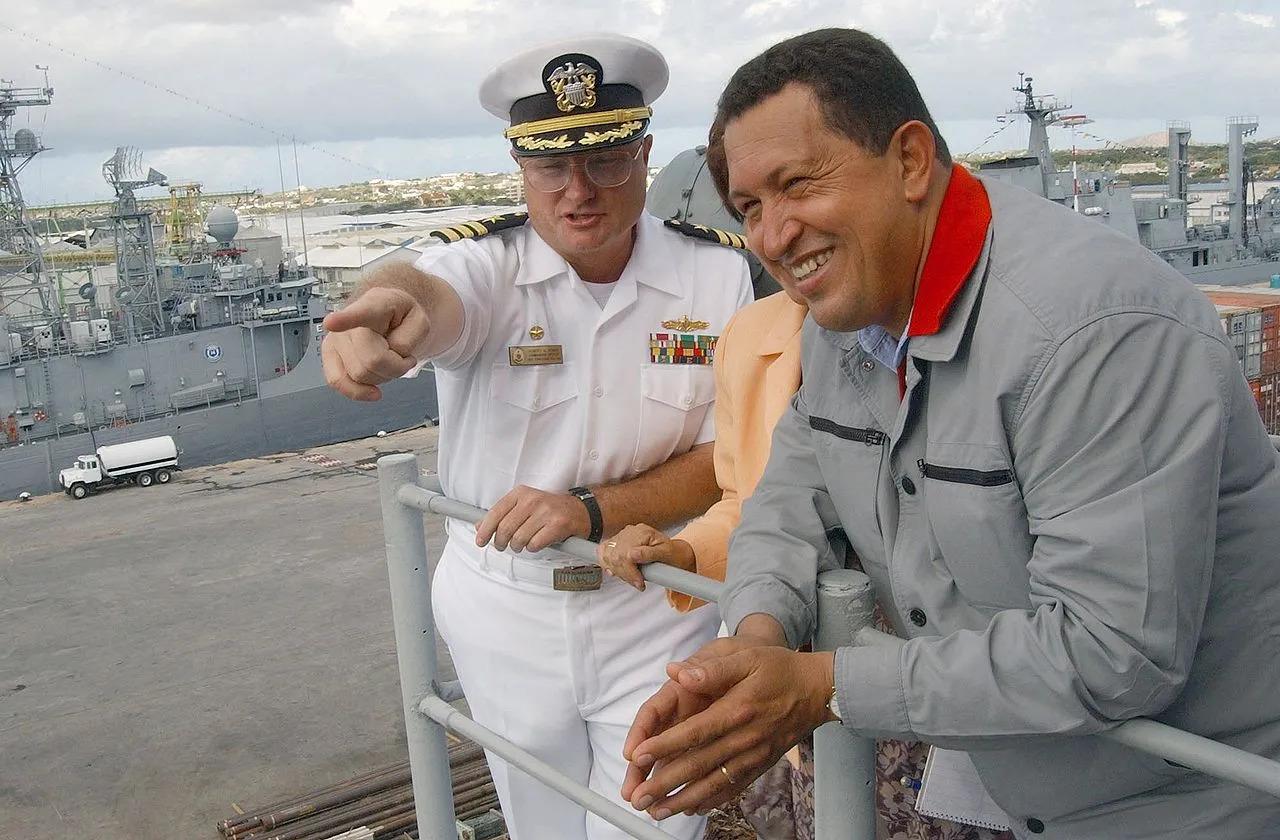
Chávez visiting the USS Yorktown, a U.S. Navy ship docked at Curaçao in the Netherlands Antilles, in 2002
The term Cartel de los Soles emerged in Venezuela long before any U.S. drug indictment. Journalists and corruption prosecutors first used it in the early 1990s. In 1993, two National Guard generals, Brig. Gen. Ramón Guillén Dávila and his successor, Orlando Hernández, were caught in a CIA-DEA sting smuggling cocaine. Their sun-epaulette uniforms inspired the tongue-in-cheek label. The name was never meant to be taken literally. It began as a journalistic label describing corruption among Venezuelan generals, not an organized crime syndicate. In other words, the term pointed at drug-connected officers, not a formal cartel hierarchy.
In fact, a 1993 Time magazine exposé revealed that General Guillén Davila, until then Venezuela’s top drug-fighter, had been overseeing multi-ton cocaine shipments with the unwitting cooperation of CIA officers. Guillén later confessed to DEA agents under immunity that he had profited from the ring, saying he wanted to do “what Noriega did — no worse, no better.” The leak of that scandal sparked whispers of a high-level network, but it fell apart in U.S. courts. Guillén testified, and the schemes unraveled.
Under Hugo Chávez, new instances of corruption involving soldiers surfaced, an ominous foretaste for a regime later led by his heir. In 2008, for example, U.S. authorities designated Defense Minister Henry Rangel Silva for allegedly supporting FARC cocaine trafficking. In 2005–2006, Chávez’s government itself blamed two generals in Caracas, in a hidden filming, accusing them of forming a “Bolivarian Cartel” to traffic cocaine for political gain. And in 2004, Caracas, journalist Mauro Marcano was murdered after he claimed another National Guard head was deep in drugs. Throughout this period, Venezuelan dissidents and opposition media mentioned a Cartel de los Soles in passing, but each case was portrayed as isolated corruption, not a single mafia. As one Chávez-era official put it, generals involved in narco-cases were just “rotten apples” in a larger force.
Yet signs of dark collusion continued. A landmark event came in September 2013 with the Paris cocaine haul. French authorities had tracked 1.4 tons of cocaine from Colombia into Venezuela, hidden through miles of jungle checkpoints, then flown on to Paris. Venezuelan police were kept in the dark because, as the country’s anti-drug czar alleged, elements of the Venezuelan military were complicit. The trial later would list eight Venezuelan soldiers among dozens arrested. U.S. and European officials cited the case as evidence that powerful Venezuelan officers had “colluded with traffickers.” At the same time, President Maduro, who succeeded Chávez in 2013, flatly denied any state role and called such claims a U.S. smear campaign.
By 2015, American prosecutors had begun to take action. Late that year, U.S. agents lured two Venezuelans, Efraín Campo Flores and Franqui Flores, nephews of Venezuela’s first lady, to a sting in Haiti. In the trap, they agreed to ship 800+ kg of cocaine via Venezuela to the U.S., with plane-loads departing from Maiquetía airport. Arrested in Port-au-Prince, they eventually pleaded guilty and were sentenced to 18 years each. The judge noted prosecutors’ evidence that the nephews had boasted that their step-grandfather, President Maduro, was watching “a lot of money” roll in. Crucially, the indictment described drug flights out of a government-controlled airport with cooperation from “persons acting at the direction of the Venezuelan Presidency”. Here, investigators saw a hint that cartel-level corruption stretched to the highest circles.
Finally, in March 2020, the U.S. Department of Justice dramatically leveled charges against President Nicolás Maduro himself, plus his wife Cilia Flores and high officials Diosdado Cabello, Vladimir Padrino López, and others. The Indictment painted Maduro’s government as a “corrupt, illegitimate government” that had “conspired with [Colombian] narco-terrorists… to distribute enormous quantities of cocaine” to the U.S. It explicitly invoked “Cartel de los Soles” in court: “powerful Venezuelan elites enrich themselves through drug trafficking… referred to as the Cartel de los Soles…because of the sun insignia on their uniforms”. U.S. prosecutors said hundreds of tons of cocaine, more than 250 tons a year by 2020, had transited Venezuela with regime protection. They accused Maduro of using cocaine “as a weapon” and funneling its proceeds to armed groups. Though the generals were never explicitly “leaders” of a formal cartel in the indictment, many news stories thereafter shorthand-referred to the Venezuelan drug networks as “Cartel de los Soles”.
In July 2025, the U.S. escalated again. The Treasury Department officially sanctioned the “Cartel de los Soles” as a terrorist organization under existing laws. OFAC’s press release bluntly defined it as a “Venezuela-based criminal group headed by Nicolás Maduro and other high-ranking officials” that supports gangs like the Tren de Aragua and Mexico’s Sinaloa Cartel. Secretary James O. “Bobby” Bessent warned that “the cartel’s leaders abused Venezuelan institutions” to traffic drugs and threatened U.S. interests. On 24 November 2025, the U.S. State Department added Cartel de los Soles to its Foreign Terrorist Organization list, a first for what had been seen as an internal Venezuelan matter.
The U.S. case against the Cartel of the Suns thus rests on a series of indictments and investigations, such as DEA and FBI probes, confirmed drug busts, financial intelligence, and dozens of sanctioned or indicted officials from Hugo Carvajal to arrested generals like Néstor Reverol. Collectively, many see a pattern where many mid-level military and border officials have been caught abetting Colombian cocaine traffickers, with U.S. agencies alleging that at least some top brass knew about or profited from this trade. The question is whether “Cartel de los Soles” is a cohesive criminal cartel or a convenient label for this array of incidents.
Indictments, Defectors, and the Case Washington Built
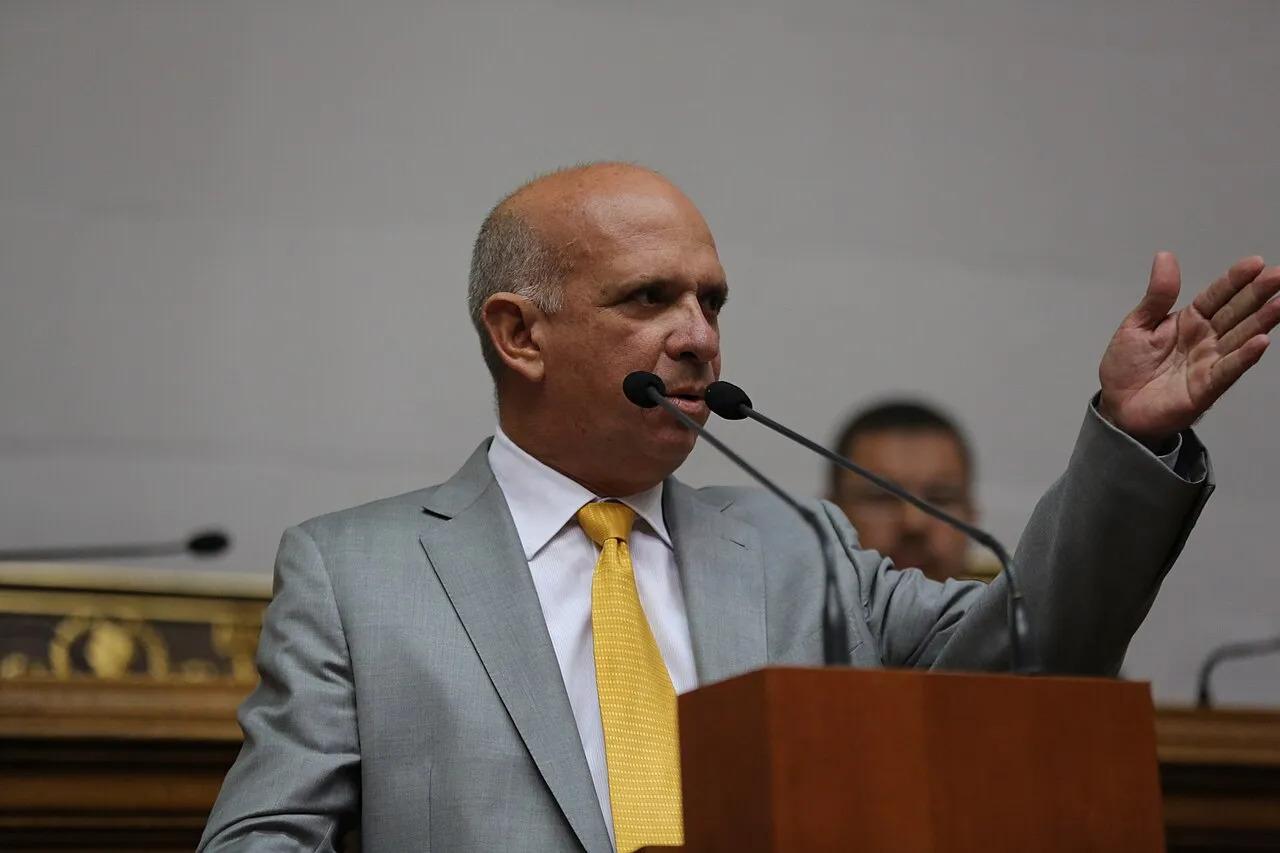
General Hugo Carvajal
Proponents of the cartel narrative point to a long lineage of cases. The 2013 Air France sting, for example, came after years of smaller interdictions. At around the same time, Venezuela’s anti-narcotics chief, General Ramón Solís, reported a steady rise in cocaine seizures and linked it to weaknesses in the military’s border control. Mexican and U.S. officials often noted that Venezuelan territory had become a transit hub for Colombian cocaine, according to documents and former officials. In 2013, Venezuela also declared that 46 tons of drugs were captured that year in an anti-drug campaign, and by 2014, President Maduro was openly warning of narco-officials in the ranks.
Inside the government, some defectors and whistleblowers have peeled back further layers. The most notable was probably General Hugo Carvajal, a former Hugo Chávez ally and then Director of Military Intelligence. In 2019, Carvajal defected to Spain, telling investigators that high-ranking Venezuelan officers were in bed with drug lords, and that President Maduro himself had long allowed traffickers to operate freely. Similarly, Mark K. Green’s 2011 book Fast and Loose recounts testimony by Venezuelan bureaucrats that generals would let planes full of cocaine leave Venezuela, provided their cut was paid. Even a state prosecutor, Thiago Henrique Mota, reportedly fled to Brazil in 2014, claiming Venezuela’s own justice system was deep in narco-banking schemes. Perhaps most sensationally, in 2015, a DEA informant testified that at least one Venezuelan minister, later identified as Elias Jaua, had personally negotiated cocaine shipments with FARC dealers, using official embassies as a safehouse. Yet, on the flip side, can the word of a defector ever truly be trusted, and are they not indebted to the nation that has offered them sanctuary? Cold War scholars might have commented.
However, U.S. indictments assemble these threads into a legal case. The 2020 indictment accused Maduro and others of establishing a “narco-terrorist” partnership with the FARC, distributing hundreds of tons of cocaine to undermine U.S. communities. One unsealed count, for instance, alleges that GNB General Néstor Reverol took millions of dollars to let FARC-smuggled cocaine cross Venezuelan territory, later arming paramilitaries with some of the profits. General Vladimir Padrino López, now Venezuela’s defense minister, was charged with accepting bribes to allow drug flights through Venezuela’s airspace. Padrino denies these charges. Meanwhile, Diosdado Cabello, once the Assembly President and a feared figure, was alleged to have provided diplomatic cover, including Venezuelan diplomatic pouches and passports, to move illicit cash. The indictment even portrays flights bearing cocaine personally cleared by the Venezuelan president’s circle, such as a 2017 shipment leaving from airplanes parked at Maduro’s command at Caracas airport.
In public briefings, American officials have summarized this picture. At DOJ’s press conference announcing the indictment, Attorney General William Barr said Maduro and cohorts had “poured gasoline on the fire” of narcoterrorism, calling Venezuela’s regime “plagued by criminality and corruption.” U.S. prosecutors claim “tons of cocaine” from Venezuela financed gang wars abroad. U.S. Treasury Secretary Janet Yellen later repeated the line that Venezuelan generals used their control of the state to ship cocaine to Europe and the U.S. as “a destabilizing weapon.” Secretary of State Marco Rubio has bluntly labeled Maduro “the leader of the narcoterrorist organization known as the Cartel de los Soles”. These statements, backed by closed-door intelligence and by drug “couriers” turned witnesses, form one side of the story.
The Cartel of the Suns is real, run by the top of the regime, and has been trafficker-friendly for decades.
The Pushback: Is the ‘Cartel’ a Political Weapon?
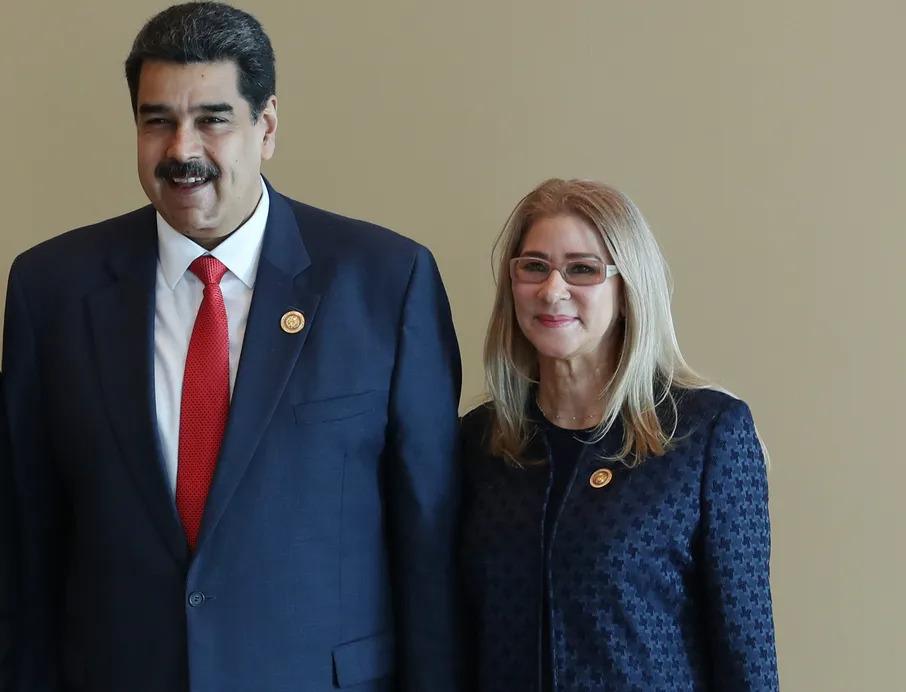
Maduro and his wife, Cilia Flores in 2019
But not everyone accepts the Cartel narrative at face value. Critics in and out of Venezuela argue that “Cartel de los Soles” is mostly propaganda and a seductive term seized by foreign powers to justify pressure on Caracas. Both Chávez’and Maduro called it a “ridiculous lie”. Pro-government media and politicians note that the U.S. invented the label in official indictments starting in 2020, and that Venezuelan experts had only ever used it rhetorically, if at all. Even Colombian President Gustavo Petro has said there is no evidence that Maduro personally heads any cartel. For years, some academics agreed. Criminologist Andrés Antillano points out that Cartel de los Soles has been mentioned in local press “since the early 1990s” only as a catchphrase for corruption, and that no court has ever proved the existence of a vertically integrated drug gang under that name.
Critics charge that Washington’s anti-drug rhetoric has become a convenient cover for oil ambitions. President Trump’s own words are telling here. In 2023, he admitted Venezuela’s collapse would allow the U.S. to “keep all that oil,” and he took credit for ending years of “financial and military chaos” under Maduro. During the 2026 press conference, Trump freely linked the mission to oil. He outlined a plan for U.S. oil companies to pour billions into fixing Venezuela’s failing fields, and warned he was ready for a “second and much larger attack” if needed to secure those resources. At home, party leaders were alarmed. Senate Minority Leader Chuck Schumer warned that the idea of the U.S. running Venezuela again “should strike fear in the hearts of all Americans,” invoking painful memories of past wars. And even pro-intervention hawks like Senator Lindsey Graham admitted the operation felt like an occupation, with one senator sneering the explanation was “specious,” noting the U.S. had effectively blockaded commerce, deployed much of its fleet, and aimed to control Venezuelan oil
Independent analysts also temper the U.S. claims. Venezuela expert Jason Marczak notes that while drug trafficking certainly passes through Venezuela, only about 5–8% of Colombian cocaine goes that way now, with much passing through the Pacific instead. U.S. intelligence reports have reportedly found no proof that Maduro orchestrates cocaine shipments to the U.S. The U.S. National Drug Threat Assessment, the DEA’s own report, never once even uses the term “Cartel of the Suns”. Instead, it names Mexican groups as the hemisphere’s true traffic bosses. And the UN’s World Drug Report (2025) notes that Venezuela produces virtually no coca of its own, with nearly all the world’s cocaine coming from Colombia, Peru, and Bolivia.
Journalistic investigations echo the skepticism. InsightCrime’s Jeremy McDermott calls the Cartel “not a traditional, vertically organized drug cartel” but a “series of disconnected cells embedded within the military”. Steven Dudley, meanwhile, also of InsightCrime, observed that Colombian gangs have effectively “turned Venezuela into their base” for smuggling into Europe and beyond. A Reuters analysis in 2014 warned that while Venezuela had a “growing role” as a transit point, arrests often hit low-ranking soldiers and traffickers, and that officials like Defense Minister Padrino publicly denied any systemic rot. After the 2025 FTO designation, Reuters quoted Venezuelan Foreign Minister Yván Gil calling it a “new and ridiculous lie” by Washington, intended to justify intervention.
Even some U.S.-based experts acknowledge a lack of hard proof. Foreign Policy’s Ella Edeger noted that no indictment in New York actually ties Maduro or Cabello to operating a cartel network. The Justice Department notably sidestepped calling them cartel bosses and instead charges them with loose conspiracies. And while U.S. courts have proved specific schemes, they’ve never demonstrated that the cartel exists. DEA informants testified, for example, that traffickers could fly drug-laden planes from Maiquetía airport as long as they paid off sympathetic officers. In that sense, the “Cartel of the Suns” can be understood as a loose network of corrupt officials profiting from the trade.
In short, critics say the Cartel of the Suns is a story weapon. They argue that Washington needed a catchy villain to rationalize sanctions and threats. They compare it to Tren de Aragua, a Venezuelan prison gang which U.S. officials also quickly declared a “terror threat” despite scant evidence. Some point out that most U.S. sanctions on Venezuela began around 2020 under Trump, coinciding with these drug allegations. They note that when Maduro’s government refuses oversight or expels the DEA, U.S. narratives often shift to accuse it of hiding drug crimes.
These voices do not deny that Venezuela has crime and corruption, only that it forms a centralized “cartel.” Many experts prefer to speak of “drug-corruption networks” inside Venezuela. As Venezuela analyst David Smilde puts it, yes, uniformed officers may do deals, but they do so within rival factions of the regime. There is no evidence of a single chain-of-command or profit-sharing cartel beyond ad hoc protectors. In fact, when the recent DOJ indictment was unsealed, reporters noted that prosecutors “refrained from claiming” Maduro was a cartel boss, likely because the evidence was thin. The indictment instead described a general “culture of corruption” and patronage, rather than a textbook cartel hierarchy.
What’s Proven — and What Isn’t
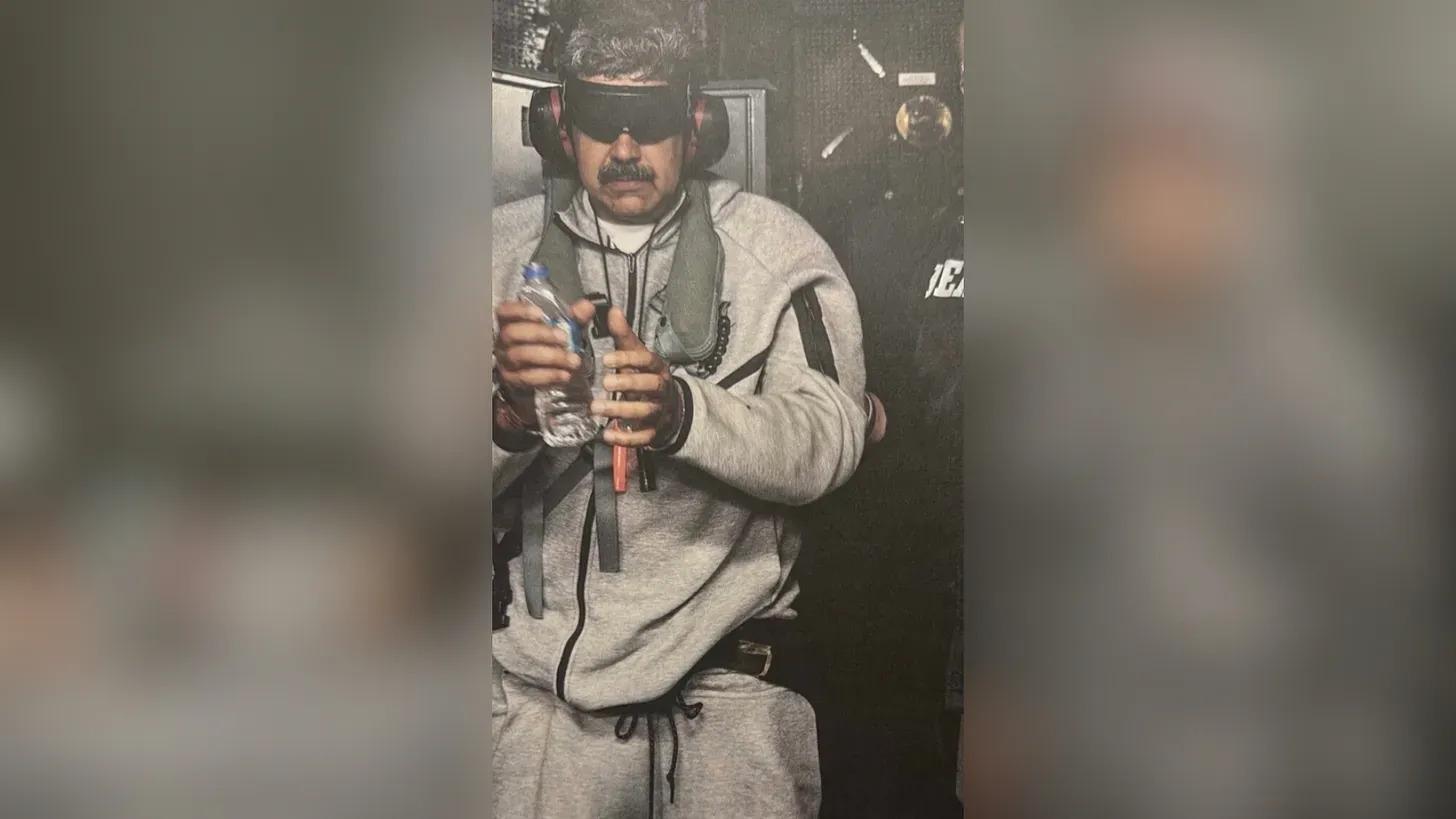
Maduro captured by the U.S. Army.
Venezuela has seen cocaine traffic through its territory, often with some official complicity. Over the last decade, dozens of Venezuelan officers and officials have faced arrest or indictment abroad for drug crimes. U.S. courts have proven specific schemes, from General Reverol’s plot to let cocaine planes fly, to the First Lady’s nephews’ deals with FARC. Smuggling rings have used Venezuelan runways and waters as routes. Major seizures like the Paris 2013 case illustrate how traffickers exploit Venezuela’s geography and bureaucracy. The U.S. Treasury and Justice Department have documented ties between some Chavista officials and groups like FARC and Mexico’s cartels. To the extent that a “Cartel of the Suns” has any reality, it is this loose cartel of privilege. That being said, some military officers and politicians ignore or take payoffs from traffickers.
However, there is no conclusive public proof of a disciplined, flag-waving “Cartel of the Suns” organization directing the cocaine trade. Independent experts, from InsightCrime to UNODC, do not use the term as if it referred to a single gang. Instead, they use it to mean “state actors profiting from drugs”. Even U.S. intelligence has quietly acknowledged that groups like Venezuela’s Tren de Aragua operate on their own, and “no evidence” ties them formally to the government. Nor has any Venezuelan court indicted a sitting general as a drug kingpin. Venezuelan officials, including Maduro, repeatedly say: “There is no Cartel de los Soles, only enemy talk.” Some critics also note that global drug data do not match the fear, as only a sliver of world cocaine flows through the Venezuelan Caribbean, and Venezuelan seizures are relatively high, suggesting authorities do fight cartels rather than let them pass.
Power, Impunity, and the Politics of the Drug War
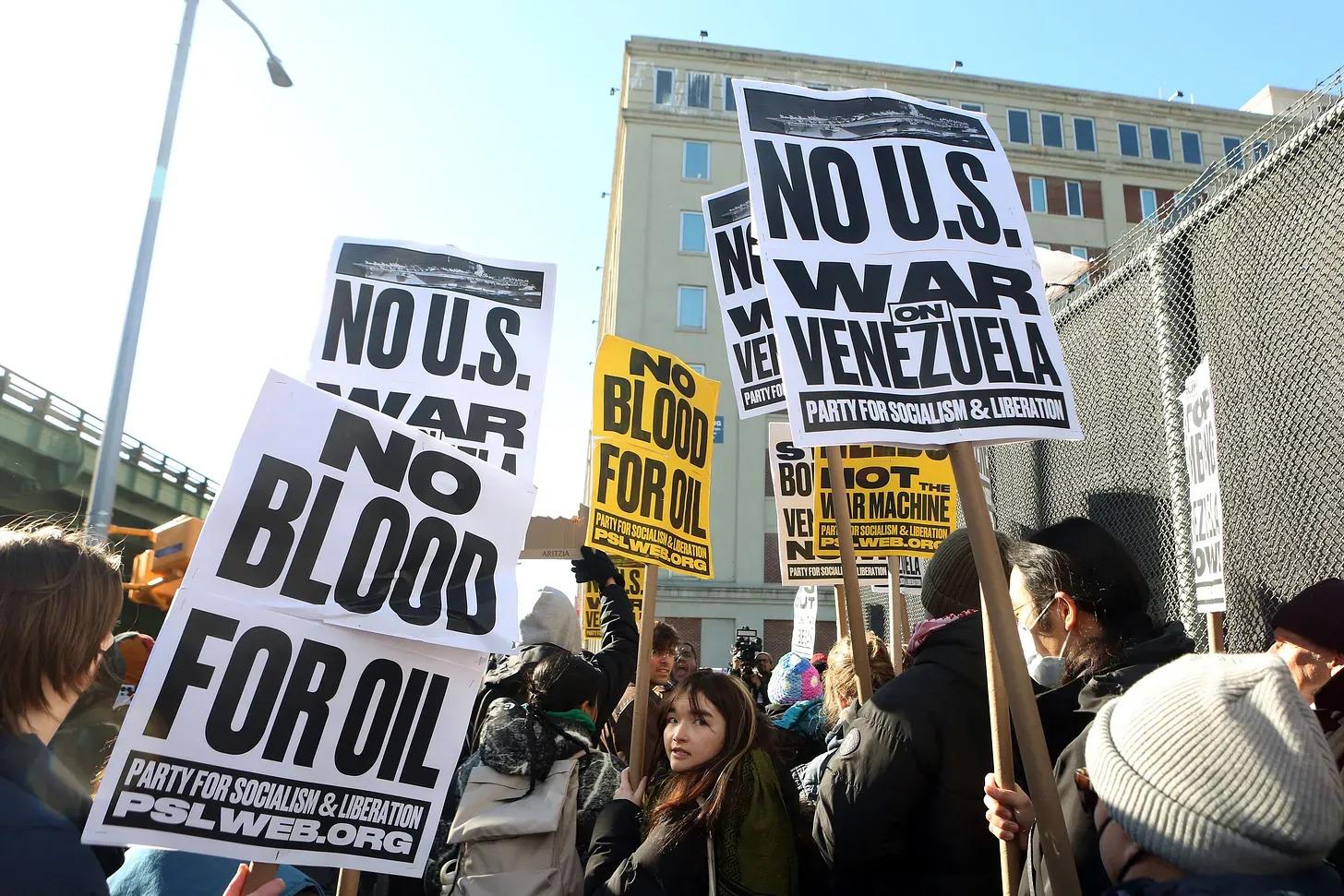
Trump protestors picket in front of Metropolitan Detention Center (MDC) in Brooklyn, New York.
In the end, the “Cartel of the Suns” saga is a tale of two narratives. One is built on hard facts such as dozens of indictments, cartloads of seized cocaine, and witness testimony of complicit officers. The other is woven from political infighting with U.S. officials eager to justify extreme measures, and Venezuelan leaders eager to paint those officials as oil-thirsty imperialists. Both sides deploy striking rhetoric. But while reporters can quote Trump saying the U.S. will “run” Venezuela and seize its oil, they can equally quote opponents warning that Washington is setting a “dangerous precedent” of “aggression” for oil. Ultimately, only a thorough, impartial inquiry will separate fact from propaganda. For now, the world must reckon with a Venezuelan reality that involves crime, corruption, and coercion all at once, and recognize how oil and politics often cast long shadows over both.
Equally, the Cartel of Suns saga reveals more profound truths about Venezuela and the global drug war. It underscores how power and impunity intertwine. Venezuela’s ruling elite are often both politicians and generals; when the line between government and armed forces blurs, so can accountability. The cases show how deeply state institutions can be co-opted by narcotics, from customs officers to air-traffic controllers, unless countered by institutions with autonomy.
It also highlights the murky political use of the drug war. The U.S. narrative had a potent effect by naming Maduro a “narco-terrorist kingpin,” raising questions of regime change as much as law enforcement. Analysts warned before the seizure of Maduro that labeling Cartel de los Soles as a terrorist group would grant legal cover for military intervention or asset seizures. Indeed, while the cocaine trade out of Venezuela may have some truth behind it, critics argue it is far smaller than the “100%” of US rhetoric: official data show Colombia (with strong US aid) still dominates the cocaine corridor, and Venezuela’s share is a fraction. In that light, the fervor around Cartel de los Soles can be seen as a geostrategic tool and a way to rally domestic support for aggressive policy against Caracas, or to justify keeping the military engaged in the region. It is the textbook definition of manufacturing consent.
Finally, this saga is a cautionary tale about “statecraft by crime”. Even if no single cartel syndicate exists, the allegations forced the world to confront how a government can become entangled with trafficking networks. The Venezuelan case shows how weak institutions create fertile ground for criminal patronage. It also shows how drug policy can become weaponized in information wars. One side uses the drug narrative to illuminate real corruption, the other accuses them of fabricating a boogeyman. In either case, truth and lies mingle.
The “Cartel of the Suns” remains a legend in plain view. At once fact-based and fantasized. On one hand is a trail of planes, pickups, and payoffs; on the other, the enduring question of who will truly pull back the curtain. The whole reality probably lies somewhere in between as a constellation of corrupt actors, but no single Sun King at the top. The challenge for investigators and journalists is to separate the concrete seizures and indictments from the political fog. The controversy over the Cartel of the Suns reveals as much about the crisis of Venezuelan statepower and the reach of U.S. geopolitical agendas as it does about drug trafficking itself.

Become a Front Page Detective
Sign up to receive breaking
Front Page Detectives
news and exclusive investigations.