

Jeffrey Epstein’s Final 33 Days: Inside the U.S. Marshals SDNY Casefile

May 4 2026, Published 2:24 p.m. ET


The Watcher in the Tower
The air was sticky and still on a late 2018 afternoon in St. Thomas. High above the runway, a young air traffic controller lifted her binoculars and looked down at a private jet rolling to a stop near the base of the control tower. The door opened. Jeffrey Epstein stepped out first, tall, gray-haired, dressed in the casual uniform of privilege. Then came two girls who looked no older than 12.
The controller’s pulse quickened. Weeks later, she saw Epstein again, this time arriving with a girl who appeared to be about 17. Each time, he greeted local staff with polite familiarity, then guided his young companions into waiting vehicles. From the tower, Jane, as we’ll call her, watched with quiet horror. Fifty yards of tarmac and glass separated her from what she feared was a crime scene. No alarms sounded. No law enforcement rushed the plane. Epstein came and went under the Caribbean sun, visible but untouchable.
Months passed before anyone in authority asked Jane what she had seen. When the call finally came, it was not from the FBI or local police. It was from a U.S. Marshal. By July 2019, Epstein was in federal custody, and investigators were trying to map the reach of his impunity. The Miami Herald’s reporting had forced old leads back into view, and one of its reporters passed Jane’s information to the U.S. Marshals Service. On July 10, 2019, Senior Inspector [REDACTED] from the Marshals called Jane at home.
He asked careful, steady questions and let her work through the memory. Yes, she said, Epstein’s private jet was often parked near the tower. Yes, she had twice seen him step off with very young girls, at least as far as she could remember. The first time, two girls “appeared to be 11 to 12 years old…white skin,” she noted. The second time, there was one girl, “maybe 16, 17,” with mixed-race features.
Jane and her colleagues had watched from the tower with binoculars. They had noted tail numbers, flight plans, and whatever else they could gather. But inbound private flights carried thin records, with no passenger lists and no clear origin points beyond vague routes. Epstein moved like a phantom, even when he landed in full view.
When the call ended, Jane hung up and exhaled. The Marshal thanked her for her time and said others might follow up. That was two days after Epstein’s arrest. One month later, Epstein was dead in his cell. Jane never heard from the Marshals, or anyone else, again.
The Open Secret Casefile
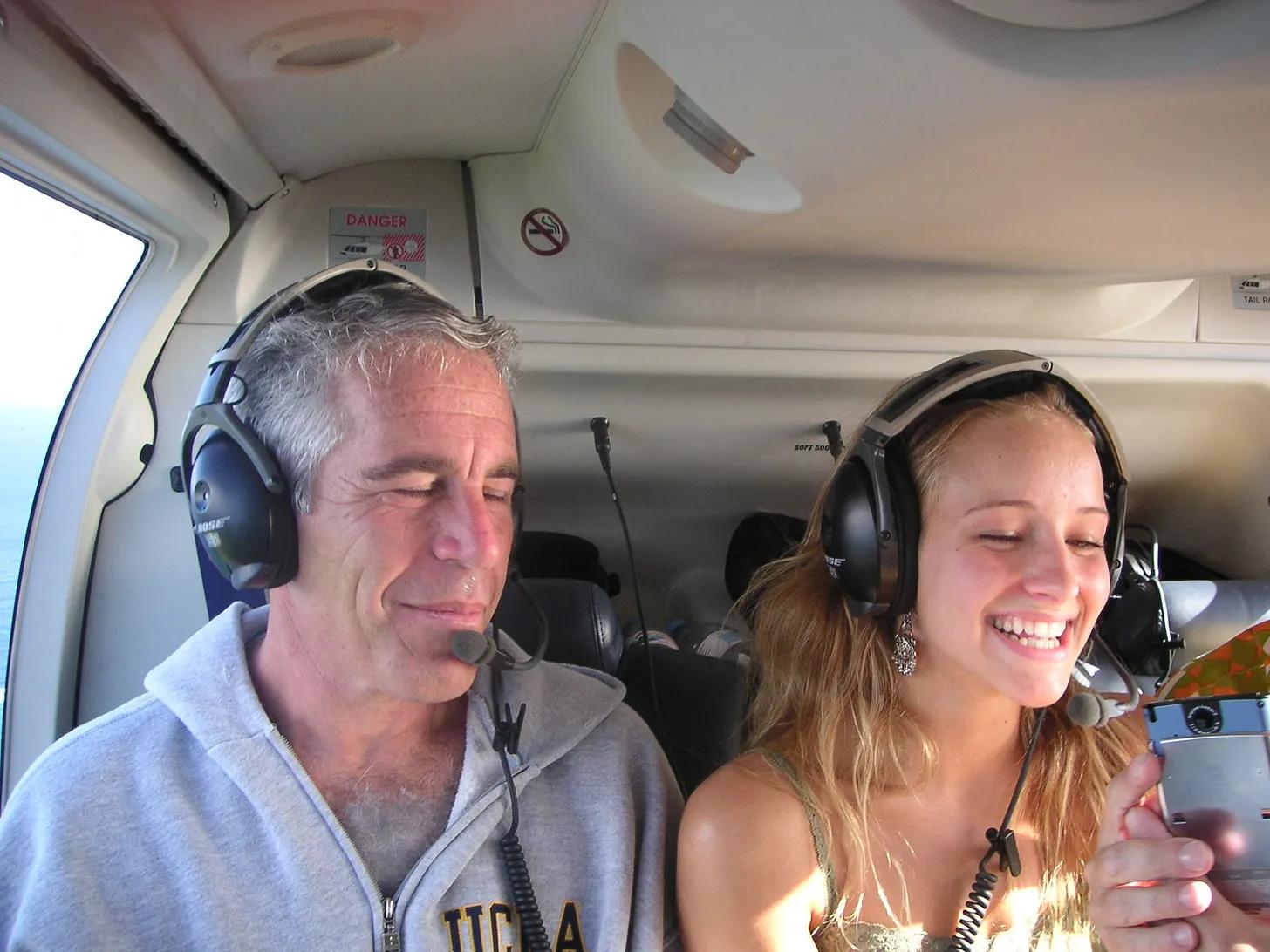
Jeffrey Epstein accuser, Teala Davies in a photo with him on a helicopter in 2002. They are on their way to Epstein's compound in the US Virgin Islands.
What happened between Epstein’s long untouchable decade and his sudden jailhouse death in 2019 has been examined again and again. Yet the official paper trail from those final weeks, the dry record left behind by the justice system as it finally moved against him, has remained mostly out of view.
The Jeffrey Epstein USMS SDNY Office File is the Marshals Service’s internal dossier, running from the day Epstein entered federal custody in New York to the day his case and his life ended. It is 70 pages of forms, memos, and paperwork, stamped LAW ENFORCEMENT SENSITIVE. On the surface, it is dull. Underneath, it carries the shape of the case itself. This is not a courtroom story built for headlines. It is the raw record of the machine, what the jailers, processors, deputies, and clerks saw, what they did, and what they did not do.
There are no lurid witness transcripts here, no confessions, no polished evidence photos. The file tells its story through government forms and terse memos. It opens on July 8, 2019, as Epstein is moved through the federal courthouse at 500 Pearl Street in Manhattan, flanked by U.S. Marshals. It ends on August 10, 2019, when those same Marshals record, with cold finality, that “EPSTEIN committed suicide while in custody in New York.”
Between those dates, the casefile shows a pattern of institutional behavior that is procedural, strange, and quietly revealing. Even as the system finally moved against Epstein, it kept following its own routines and habits of deference. The result is a record that can feel as sharp and skeptical as true crime, but as restrained and redacted as any government archive.
What follows is a walk through that file. It is an investigative true crime story drawn not from rumor, speculation, or message-board mythology, but from the dry records of the agencies that handled Epstein’s case. It does not retell every detail of his life or crimes. There are books and documentaries for that. Instead, we stay with the SDNY casefile itself, looking at what it shows, what it suggests, and what it leaves strangely untouched. Together, these pages show how a man like Epstein moved through powerful systems for so long, and how those same systems handled him at the end.
No One Special
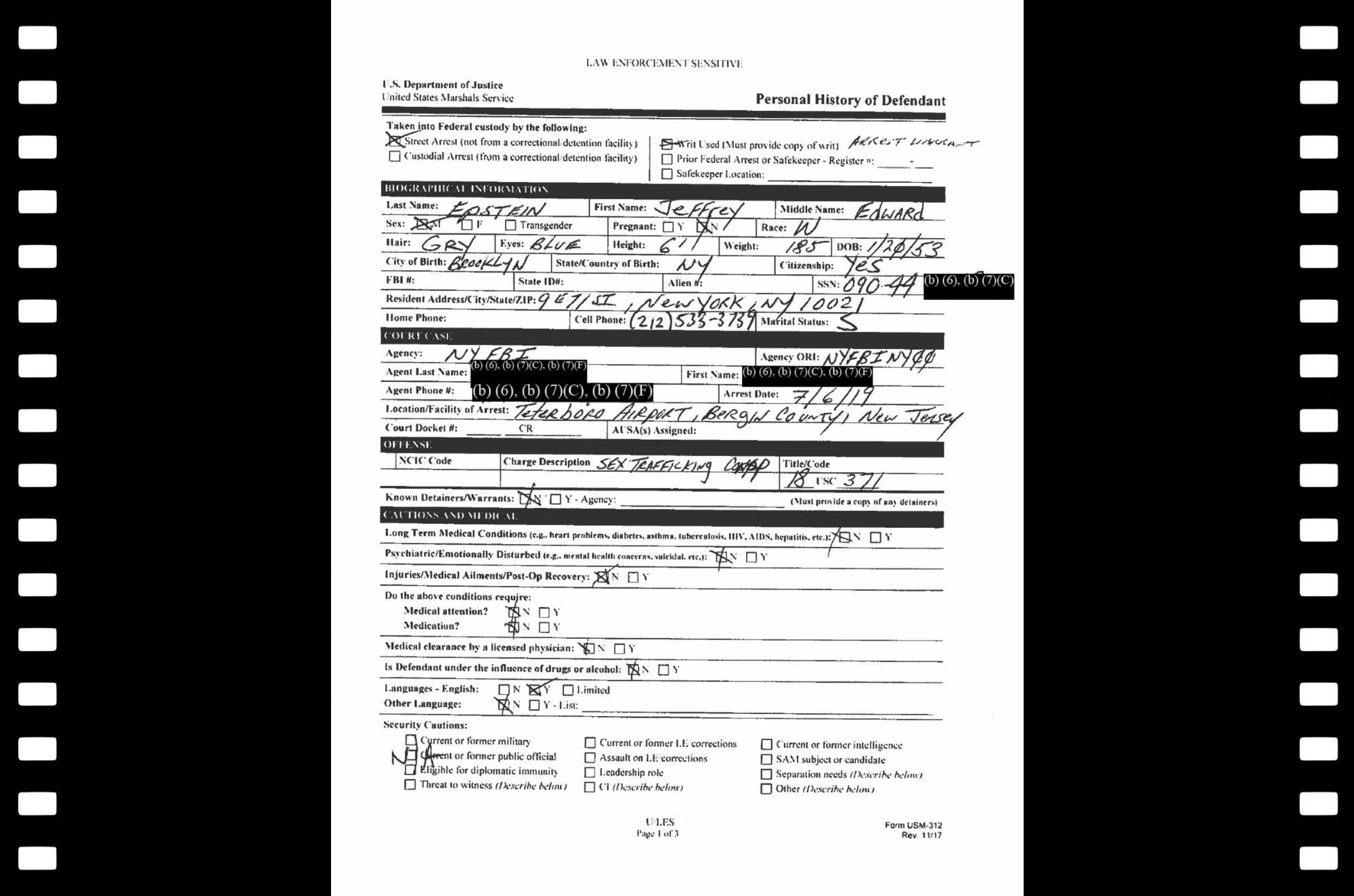
The Marshals Service “Office File” begins at the moment Epstein was first processed into federal custody. It is essentially a stack of intake sheets, checklists, and custody forms. Given Epstein’s notoriety, one might expect urgent warnings across the page, some obvious signal that this was not an ordinary prisoner. Instead, the tone is almost flat.
Epstein was arrested on July 6, 2019, when FBI agents took him into custody at a New Jersey airport. Two days later, on July 8, the Marshals formally received him for his first court appearance. In bureaucratic language, it was a “Street Arrest,” meaning he had not come from another detention facility. The paperwork does not announce a billionaire predator entering the system. It barely even reacts to him.
On the Personal History of Defendant form, under Security Threats, a deputy checked the box identifying Epstein as a sex offender. Other flags that might have applied to a defendant with his wealth, influence, and risk profile were left blank. He was not marked as a former public official, as someone with intelligence ties, or as a prisoner requiring separation from other inmates. On paper, the Marshals treated him less like an extraordinary case than a standard defendant with one serious caution attached.
Even the biographical details feel oddly plain. Sex, male. Race, white. Occupation, “Self-Employed, Southern Trust Company,” tying him to one of his businesses in the Virgin Islands. The address he gave was not his Manhattan townhouse, but the Virgin Islands, specifically his private island residence on Little St. James, listed through Southern Trust. He provided a local phone number, and the Marshals wrote it down without comment.
To the system, he became Inmate 76318-054, a 66-year-old U.S. citizen born in Brooklyn. The file notes his blue eyes, brown hair, height of 6 feet, and weight of 185 pounds. The details are as ordinary as any booking sheet. That is part of what makes the record so unsettling. Jeffrey Edward Epstein, a man whose name had come to signify hidden power and elite protection, was flattened into fields on a form, save for the checked sex offender box and a NCIC code tied to the new sex offense charges.
The file’s note about his health now reads like a warning light. On the intake paperwork, the deputy recorded “Mental Concerns: Suicidal Tendencies.” Seen after Epstein’s death, those words carry obvious weight. But the timing matters. The entry was likely added after the July 23 incident, when Epstein was found injured on the floor of his cell in what was reported as either a suicide attempt or an assault. At the initial booking on July 8, he appeared cooperative and showed no obvious distress.
He signed the forms. He authorized the release of medical records to the Marshals, presumably so officials could track any care issues. He also signed a statement saying he had “no personal property to declare while in U.S. Marshals custody.” That means he handed over no wallet, cash, valuables, or other belongings for storage. The file does not explain why. Epstein may have arrived with nothing, or he may have arranged for his effects to be passed to his attorneys rather than to a jail property locker.
That small detail feels telling. Even in custody, Epstein seems to have kept some control over the terms of his surrender. He had spent a lifetime managing access, information, and possessions. The absence of property in the file does not prove special treatment, but it does fit the habits of a man who knew how to keep the system from holding more than it had to.
Behind the flat intake paperwork, the justice system knew exactly who it had. Epstein’s case was assigned in the Southern District of New York under Docket 19-CR-490, with veteran prosecutor Alex Rossmiller leading the government and high-powered defense attorneys, including Martin Weinberg, representing Epstein. At his initial appearance on July 8, Epstein pleaded not guilty. Magistrate Judge Henry Pitman remanded him to custody and scheduled a detention hearing.
The Marshals’ detention worksheet notes “DETENTION ON CONSENT W/O PREJUDICE.” In practical terms, Epstein’s lawyers did not fight his temporary detention at that first appearance, saving the battle for the coming bail argument. A handwritten note listed a bail hearing for July 11 at 2 p.m., though that hearing was later postponed to July 15. Epstein’s team would soon propose an extraordinary package, including house arrest at his mansion and a private security detail paid for by Epstein himself.
The judge did not accept it. On July 18, Judge Richard Berman denied bail, citing both danger to the community and flight risk. Epstein would remain in custody while awaiting trial. The Marshals moved him to the Metropolitan Correctional Center in lower Manhattan, where he was assigned inmate number 76318-054 and housed in the Special Housing Unit.
The office file does not capture the drama of that bail fight. It records only the outcome. One line in the Individual Custody/Detention Report changes Epstein’s status to “WT-TRIAL,” meaning awaiting trial, as of July 8, 2019. Another form, the USM-129 custody report, notes that Epstein spent “Total Days Boarded: 33” at MCC New York, from July 8 until August 10.
There is a coldness to that number. Thirty-three days. The file says little about what those days were like, the threats from other inmates, the possibility of cooperation, or the July 23 incident that left him injured and briefly placed on suicide watch. Those details lived elsewhere. In the Marshals’ records, Epstein’s stay at MCC becomes a short line of data. Admitted July 8. Released August 10.
Keys to an Empire
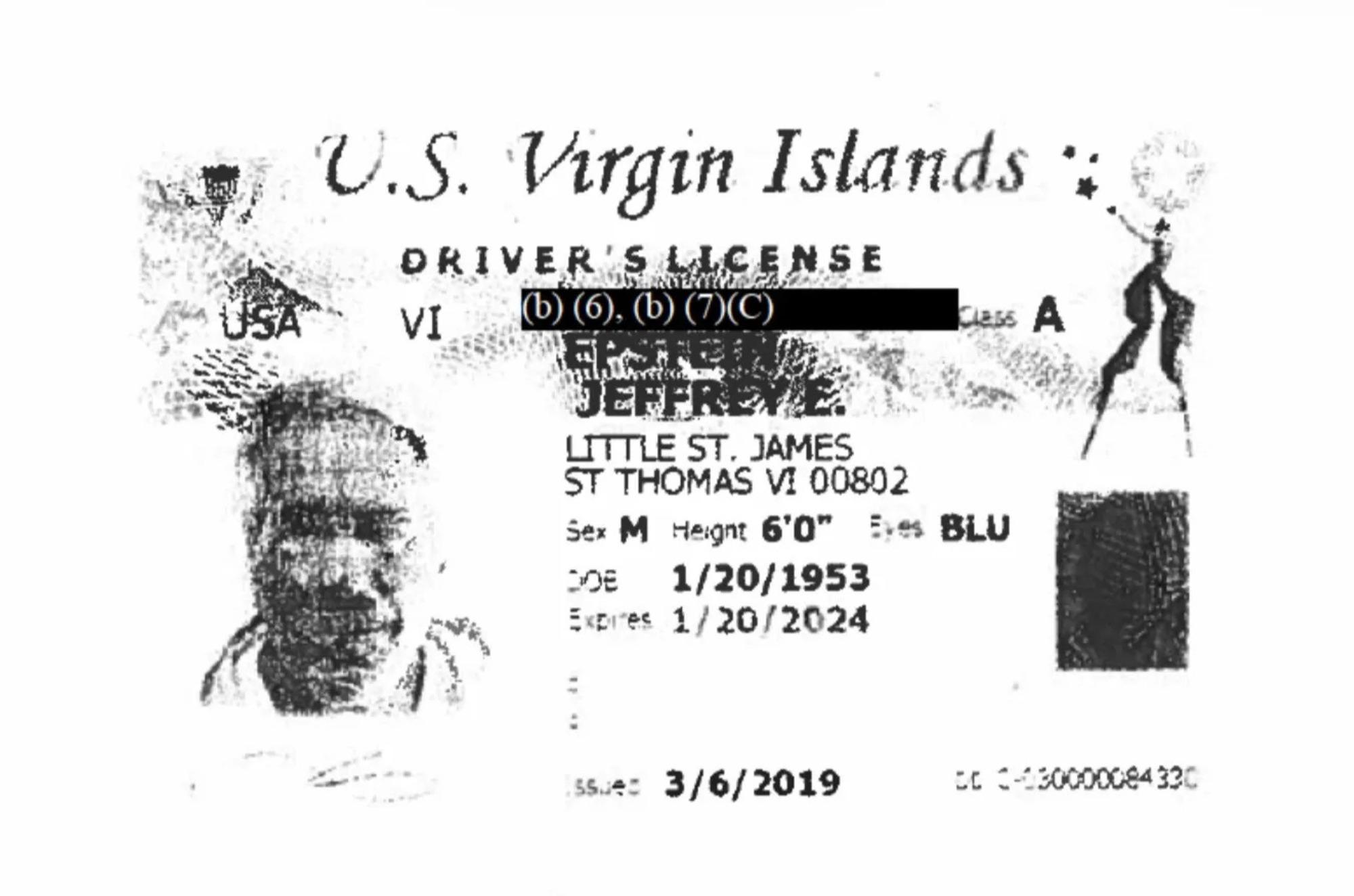
For all its flat tone, the file lets small details slip through that point back to Epstein’s world outside custody. In the section covering identification and associations, the Marshals note that he claimed no aliases, which in itself says something. Epstein did not need them. He operated in the open, under his own name, and the system largely accepted that for years.
What he did provide were official identification documents, copied into the file as part of routine processing. Two stand out. One is a U.S. Virgin Islands driver’s license issued on March 6, 2019. It lists his address as Little St. James, his private island in the Caribbean, effectively turning one of the most notorious locations tied to his crimes into a legitimate residence on a government-issued card. The expiration date runs to January 2024, suggesting he expected to continue moving freely for years.
The second is a Florida identification card issued in February 2009, not long after his earlier conviction in Palm Beach. It lists his address as El Brillo Way, the same property where dozens of minors were abused. By that point, Epstein had already been designated a convicted sex offender, yet he still held a valid state ID tied to that residence. Together, the two cards reflect how easily he moved between jurisdictions, maintaining a presence in multiple places with official recognition from each.
The file also shows how quickly federal authorities moved to secure his assets once he was in custody. On the same day he appeared in New York, prosecutors initiated steps to freeze key properties, including his Manhattan townhouse. A notice of pending forfeiture was prepared and filed against the property at 9 East 71st Street, warning any potential buyer or lender that it could be seized as part of the case. The paperwork lists Maple Inc., one of Epstein’s shell companies, as the registered owner.
This was not a slow process. Within hours of his arrest, the government was working to lock down the physical parts of his network. The Marshals Service began cataloging his real estate holdings, identifying them for possible seizure and linking them to the charges in the indictment. Internal forms in the file break this down in plain administrative terms, listing block numbers, occupancy status, and estimated timelines for forfeiture claims.
The language is technical, but the intent is clear. The system was not just going after Epstein as an individual. It was moving against the infrastructure that supported him, treating his properties as part of the machinery that allowed his crimes to continue.
At the same time, the file shows how little of Epstein’s personal world actually entered custody with him. A property receipt dated July 8, 2019, confirms that he had no personal belongings logged by the Marshals. No cash, no watch, no phone, nothing stored under his name. The deputies had copies of his identification, but nothing else of material value passed into their hands.
That absence stands out. It suggests that Epstein, even at the moment of arrest, had managed the transition on his own terms as much as possible. Whether by planning ahead or relying on legal counsel, he avoided handing over anything beyond what the system required. It is a small detail, but it fits a larger pattern, a man who understood how to move through institutions without ever fully surrendering control.
33 Days in Lockup
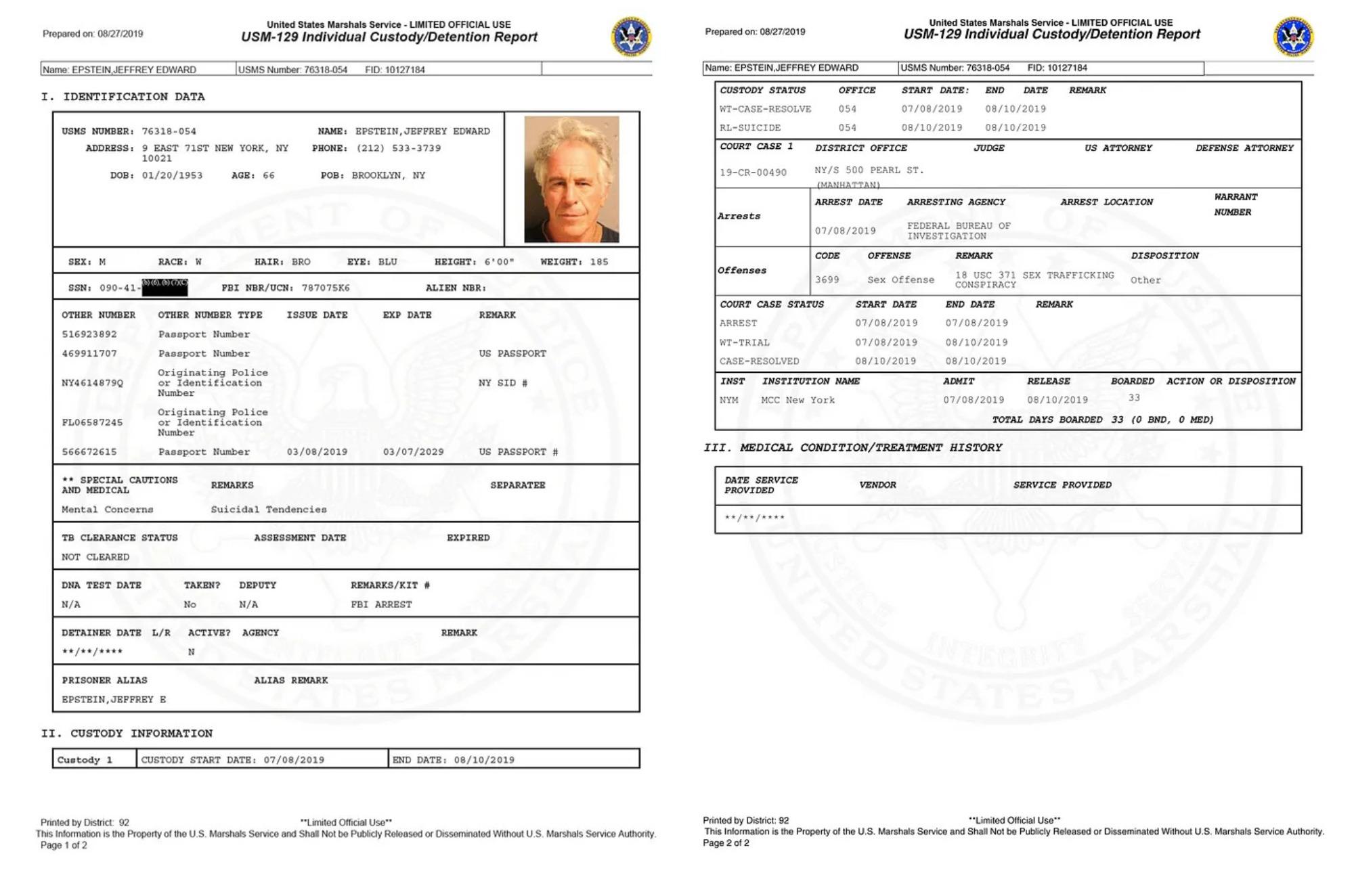
Once bail was denied, the Marshals stepped back and the Bureau of Prisons took over. Epstein was housed at the Metropolitan Correctional Center in lower Manhattan, waiting for trial. The office file still tracked key developments, though, and one entry stands out with hindsight.
On July 24, 2019, the Marshals updated his profile to note “Suicidal Tendencies.” The Individual Custody Report reflects that change under Special Cautions, marking him as a risk. It is a small line in a form, but it carries weight. By then, Epstein had been found injured in his cell, an incident described at the time as either a suicide attempt or an assault. The Marshals recorded the risk. Beyond that, the file shows little change.
There are no additional instructions, no special handling notes, no clear escalation in how he was managed. The Marshals had delivered him to MCC and flagged the concern. From that point, the responsibility sat with the Bureau of Prisons. Each part of the system stayed within its role. The Marshals handled custody transfer and record-keeping. The prison handled day-to-day supervision. Prosecutors focused on building the case.
On paper, everything was functioning as designed. In practice, that separation created gaps. The file does not show any follow-up measures after the suicide risk was noted, no indication of continuous monitoring or heightened coordination across agencies. Epstein remained listed as an awaiting-trial inmate with a caution attached, nothing more.
Looking back, that structure feels fragile. The system identified a problem but did not visibly adapt to it. Each agency did what it was required to do, no less, and no more. The result was a chain of responsibility without a clear point of ownership, and in that space, the risk remained.
The office file does not describe what happened inside the prison in detail. It does not mention the conditions of his cell, the staffing levels, or the decisions that led to changes in his supervision. Those details lived in other records. What it does show is how little the formal record changed after the warning appeared.
From the Marshals’ perspective, Epstein’s time in custody continued as a short sequence of dates and status updates. He entered MCC on July 8. He remained there under trial status. The note about suicidal tendencies was added. Then, less than three weeks later, the sequence ended.
Case Closed
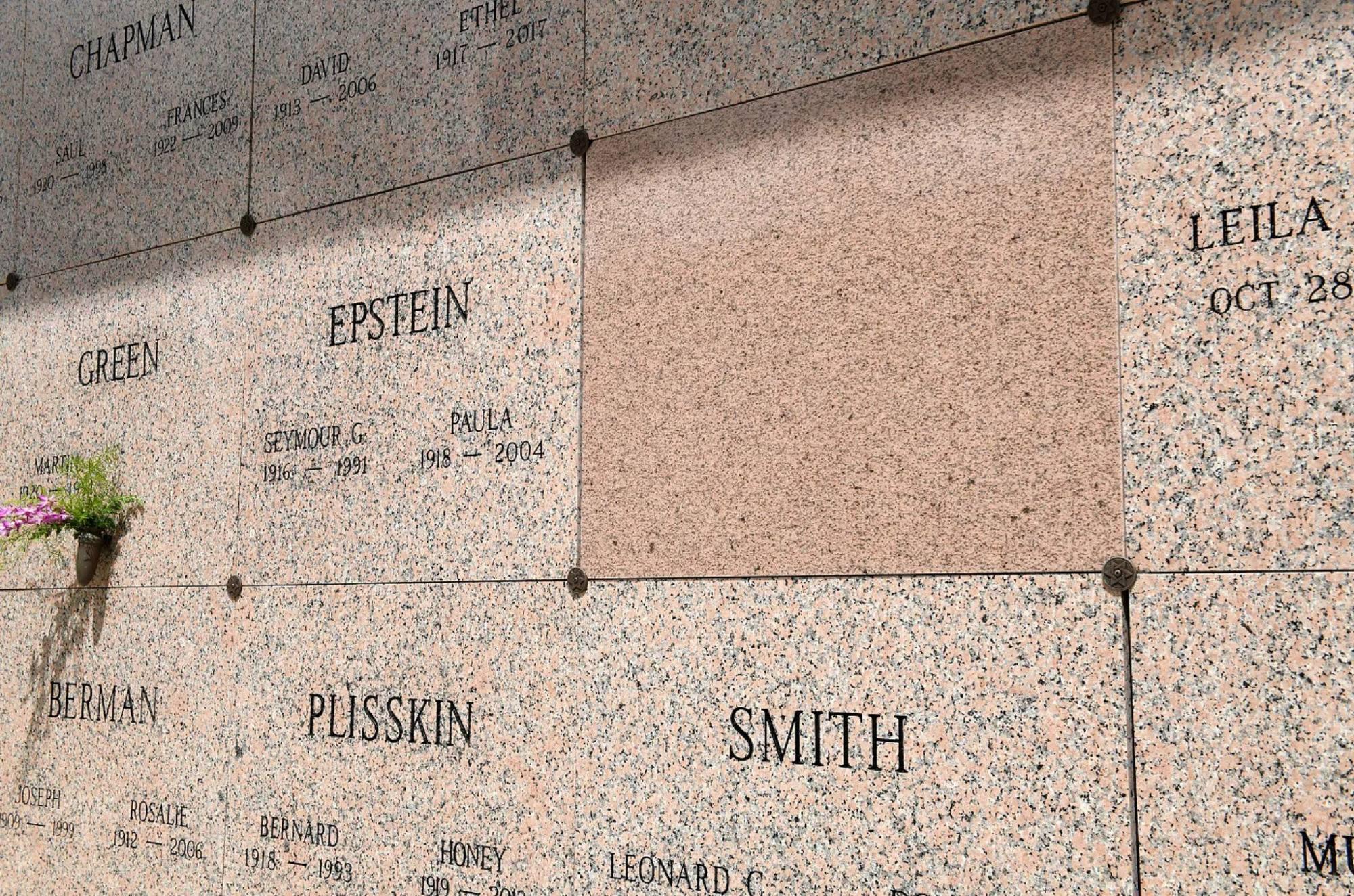
This unmarked stone crypt is believed to mark the spot where serial Jeffery Epstein was laid to rest. The unmarked tomb besides his parents, Pauline 'Paula' and Seymour, lies within the tranquil memorial gardens at a Jewish mausoleum in Florida.
On the morning of August 10, 2019, Jeffrey Epstein was found dead in his cell. The news spread across the world within hours, bringing shock, anger, and a wave of speculation that still hasn’t settled. Inside the system, the record is far quieter.
The Marshals file captures it in a single line. “On August 10, 2019, Epstein committed suicide while in custody in New York.” There is no hesitation in the wording, no alternative framing. That is the conclusion entered into the record.
What follows is more revealing. Two days later, on August 12, a Senior Inspector from the Marshals spoke with the U.S. Attorney’s Office in the Virgin Islands. The note records the outcome in blunt terms. “All parties agreed this case would be dropped.” With that, the remaining investigative steps were halted. A pending search warrant for Epstein’s phone was cancelled. International evidence requests were scrapped. The file states that all investigative activity was stopped.
A later report closes the loop. “This case is now closed.”
The speed of that shift is hard to ignore. In a matter of days, an active federal case involving one of the most high-profile defendants in recent history was shut down because the central figure was gone. The file does not dwell on the decision. It records it and moves on.
Other threads do not appear here. There is no discussion of Ghislaine Maxwell or any other associates. At that point, she had not been charged, and the Marshals’ focus remained on Epstein alone. Once he was no longer alive to face trial, the case, as defined within this file, ended.
There is a silence around the decision-making. Names are redacted. Conversations are reduced to summaries. The people involved fade into placeholders, “[REDACTED],” leaving the action without clear authors. It gives the record a strange quality. The outcome is certain, but the path to it is obscured.
Outside the system, Epstein’s death raised more questions than it answered. Inside the file, it closes the matter. The machinery stopped, the paperwork was completed, and the case was filed away.
The System, Laid Bare
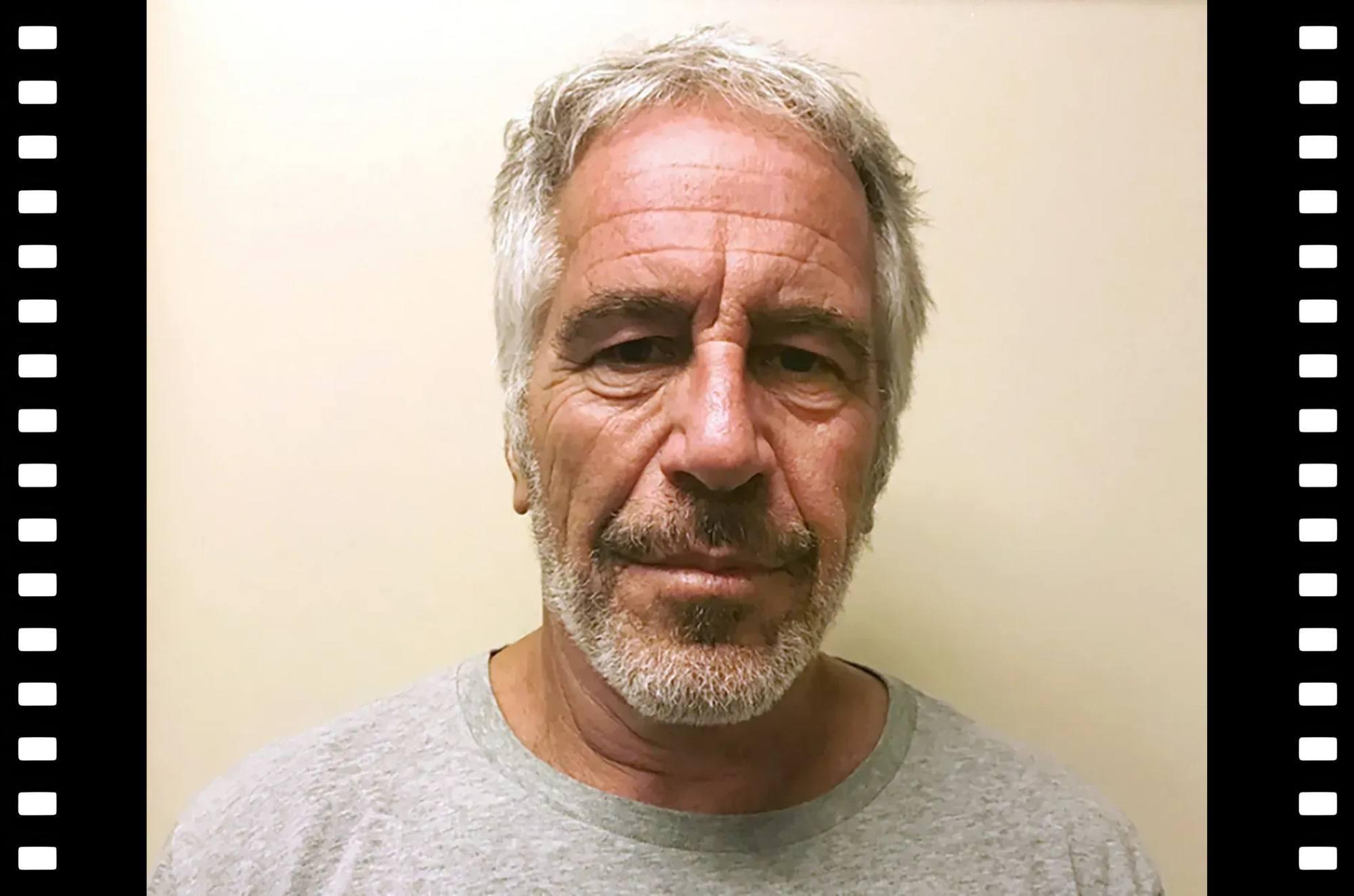
Financier Jeffrey Epstein was been found dead on 10 August 2019 in his prison cell in New York while awaiting trial on sex trafficking charges
Reading through the SDNY file is a strange experience. On one level, it strips away the mythology and shows how the federal system handled a high-profile defendant in routine terms. Intake forms, custody reports, medical notes, property receipts, and court coordination all appear exactly as they would for any other inmate. There is no sign of special handling, no visible interference, and no obvious deviation from standard procedure. The Marshals processed him, logged his details, flagged a risk when it appeared, and moved him through the system.
On another level, what is missing carries just as much weight as what is present. The file reflects a system broken into parts, each one focused on its own task. The Marshals handled transport and documentation. The Bureau of Prisons was responsible for his safety. Prosecutors worked the case. Each role stayed within its limits. No single record here shows anyone stepping back to assess the whole picture.
That separation helps explain the outcome. Epstein was treated according to standard practice at every stage. He was arrested, processed, held without bail, and placed in custody. The system followed its own rules. But those rules were not built for a case like this, and the file shows no sign that they were adjusted to meet the risk.
One detail captures that gap clearly. The Marshals agent who contacted the air traffic controller did so because a journalist had passed along her information. The lead did not originate inside the system. It came from outside, then filtered in. That moment says something about how the investigation moved, with official action sometimes trailing public reporting.
The file also points to questions it cannot answer. What would have happened if Epstein had faced trial? What evidence might have been introduced? What names might have surfaced under oath? Those possibilities sit just beyond the edges of the paperwork. The file does not speculate, but it leaves space for those questions to linger.
In the end, the SDNY office file shows a system that functioned as designed and still failed to deliver a full outcome. It handled Epstein correctly in procedural terms, but that correctness did not lead to accountability in the way many expected. The record is steady, controlled, and limited, and in that limitation, it reveals more than it intends.
An Open File, and Open Wound

Nadia Marcinkova and Jeffrey Epstein on his private island.
The final pages of the SDNY file feel quiet, almost routine, as if the system is closing out any other case. There is no reflection, no attempt to step back and account for what was lost. The paperwork is completed, the report is filed, and the process ends. For the agencies involved, that is the conclusion.
Outside that system, the story does not end so cleanly. Epstein’s death left a gap that has never been filled. There was no trial, no public presentation of evidence, no moment where the full scope of his network was tested in court. What might have emerged from that process, names, connections, accountability, remains unknown.
The file itself becomes part of that absence. It offers a clear view of how the system worked in those final weeks, but it also shows how quickly everything stopped once the central figure was gone. Lines of inquiry were dropped. Requests were cancelled. What had been an active investigation became a closed record almost overnight.
There is a tension running through those pages. On one hand, they show a system following its rules, documenting actions, and maintaining order. On the other, they reveal how limited that structure can be when the stakes move beyond routine cases. The result is a record that feels complete in form but incomplete in substance.
For those looking back, the file does not provide closure. It provides a framework, a sequence of actions that can be traced and examined, but it leaves the larger questions unresolved. What it shows most clearly is how much of the story depends on what never reached the page.
That is where the case remains. Closed in the system, open everywhere else.
Become a Front Page Detective
Sign up to receive breaking
Front Page Detectives
news and exclusive investigations.