
The Body in the DumpThe Bodyguard, the Movie Star, and the Blackmailing of a President

Delon with his wife Nathalie (left) in Buenos Aires in 1965.
Feb. 24 2026, Published 11:40 a.m. ET


Political scandals are not unusual anywhere in the world, with power, sex, and money often inspiring terrible crimes. From affairs with aides, plots to kill, and the involvement of Soviet spies, issues such as the Monica Lewinsky or Stormy Daniels scandals in the US or the Jeremy Thorpe and Profumo affairs in the UK have been fodder for the tabloid press ever since its very beginning. However, few of these gossip-fueled incidents actually involve a murder, which places France’s Marković Affair in a category all by itself. From the streets of Yugoslavia to the corridors of power, with claims of nude photos, blackmail, and the possibility that a French President may have ordered a murder, the Marković Affair remains an enduring mystery.
Belgrade Muscle, Paris Money
Stevan Marković was born on May 10, 1937, in Belgrade, then part of the Kingdom of Yugoslavia. After an early childhood during the Second World War, Marković and his cousin Miloš Milošević became well known as street fighters in the city during the time of communist President Tito. Marković’s skills on the street brought him to the attention of Serbian gangster Nikola Milinković, eventually being well acquainted enough that he was one of the lead mourners at Milinković’s funeral. He was a very different character to his friend, with Milošević, better known as Milos Milos, coming from an influential local family. His grandfather was the mayor of a town called Knjaževac today in East Serbia. However, status meant little, and much of their private property was confiscated and redistributed to the poor, undoubtedly creating resentment for Milošević, who began looking for a way out of the country as he hoped to defect to the West.
It would be Marković who left first, however. In the summer of 1958, alongside four others, he went on a summer vacation to Istria, slipping over the border. He headed to Italy first and then over the Alps into France, where he settled into the immigrant community in Paris. Struggling for money, he spent seven years in poverty, taking occasional jobs as a photographer, living a transient lifestyle, sleeping in boarding houses, and occasionally being on the street. Eventually, he put the skills he’d learned in Belgrade to use, becoming involved in low-level crime and ending up in a Belgian prison after acting as a getaway driver for a robbery gone wrong.
Back in Belgrade, meanwhile, Milos would be in luck when French movie star Alain Delon arrived in the city to work on a proposed Marco Polo feature in 1962. The film would never complete production, but during his stay in the country, Delon would hire Milošević as a bodyguard. They went to Venice for the filming, then to Paris, where Milošević would stay until 1964 when he decided to try and find fame in Hollywood, having introduced Delon to his future wife, Nathalie Barthélémy.
With Milos leaving, Delon needed a replacement bodyguard and, remembering his cousin, Milos would suggest Marković. Delon helped get him out of prison, and Marković was suddenly thrust into a new world of money and connections, with Delon knowing the kind of career criminals that Marković liked.
Milošević would seemingly enjoy the excesses of life in Hollywood, marrying showgirl Cynthia Bouron who was notorious for affairs with several prominent Hollywood names of the era. By 1965, Milošević was having an illicit liaison with actress Barbara Ann Thomason, the estranged wife of Mickey Rooney. Both Milošević and Thomason were found dead at Rooney’s Los Angeles home in 1966, with the official inquiry finding that Milošević shot Thomason with Rooney’s revolver. However, rumor and innuendo would suggest the two had been murdered. On October 20, 1973, it would be Bouron’s turn to end up dead, being found stuffed in the trunk of a car parked outside a grocery store in Studio City, California. She’d been tied up and beaten to death, with her killer never being found.
The Sex Parties and the Camera Angle
Meanwhile, in France, Marković was similarly enjoying life, being able to put the skills he’d used alongside Nikola Milinković to good use. He was a gambler and was often suspected of cheating, yet he was mainly known for his high-class sex-fueled parties. At these parties, often including highly positioned members of French society, Marković would ensure that cameras were placed throughout the house, including in the bedrooms. Delon’s role in this has never been confirmed, but he was far from the squeaky clean movie star you might expect, being linked to organized crime himself.
Delon seemed to have a fascination with gangsters, often seen as typecast playing them and counting real ones amongst his closest friends. He knew Petit René, Le Boxeur, Le Coréen and even Gaetano “Tany” Zampa, who was linked to the Marseille Bar Massacre and the assassination of Marcel Francisci. Speaking with the New York Times in 1970, Delon would say that his associations were “probably something you wouldn’t understand,” adding that “It’s a question of origin. I myself am Corsican, and in places like that, they still have a sense of honor and the given word.”
“I don’t worry about what a friend does. Each one is responsible for his own act. It doesn’t matter what he does. Most of them, the gangsters I know… were my friends before I became an actor.” — Alain Delon.
The Godfather in the Wings
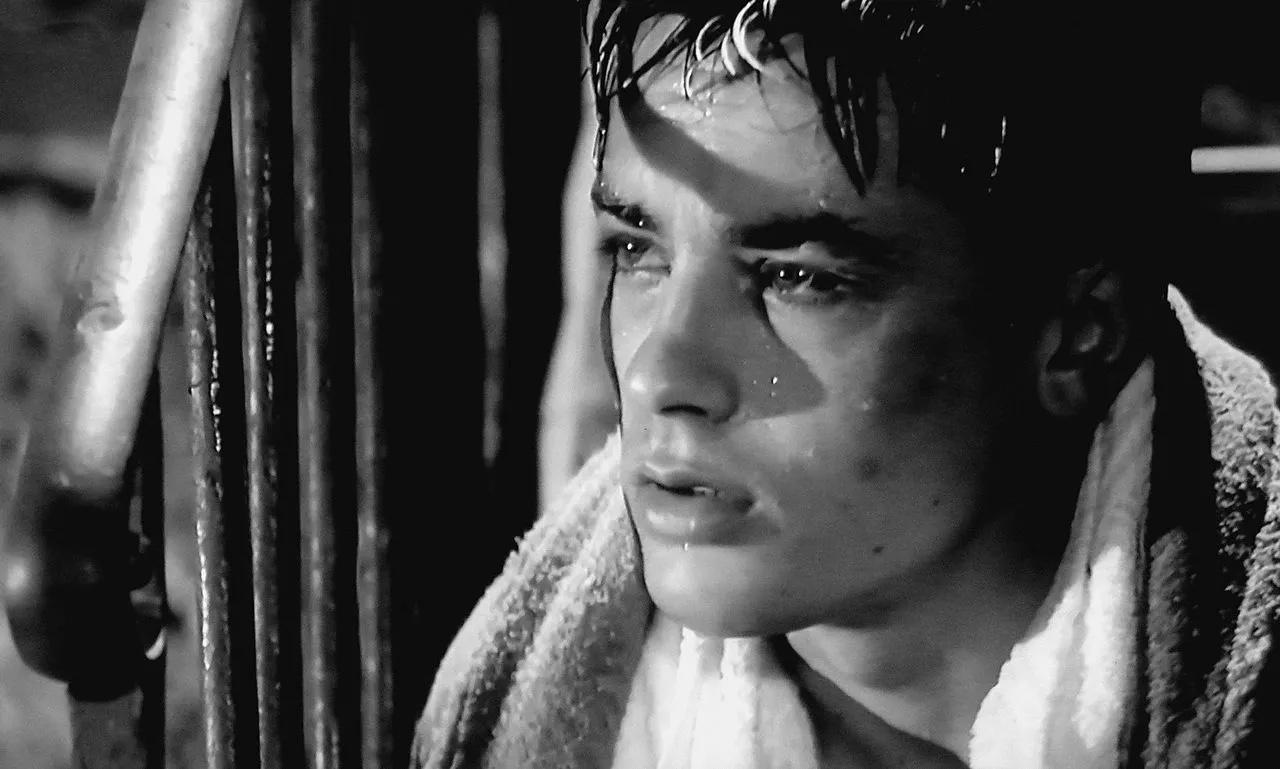
Delon in Rocco e i suoi fratelli (1960)
In the mid-to-late 1960s, Delon was one of the most famous sex symbols in Europe, receiving critical acclaim for films such as Plein Soleil, which was the first film to be based on Patricia Highsmith’s novel The Talented Mr. Ripley. Rocco e i suoi fratelli(1960), L’Eclisse (1962), Le Guépard (1963), and Les Aventuriers (1967) would assure his fame, with 1967’s Le Samouraï perhaps being his greatest role. Yet, despite the money and fame, Delon was involved with the notorious Corsican godfather François Marcantoni.
Marcantoni was well known as a mobster and had been a noted member of the resistance during the Second World War, receiving the War Cross and the Medal of Resistance. He had feuds with other classic names from French criminal history, such as Pierrot the Mad and Francis the Belgian, enjoying ingratiating himself into establishment circles and the glamorous lifestyles of people like Delon and his cinema rival Jean-Paul Belmondo.
All would likely have remained well for Marković had he not decided to start shopping the photos he was taking to the national press, the bodyguard deciding to betray Delon and Marcantoni by including pictures of the pair in what he was offering. But while Delon was certainly a megastar in France and Marcantoni was a known criminal, their importance was dwarfed by who was in other photos that Marković had in his possession — Claude Pompidou, the wife of Prime Minister Georges Pompidou. Both were said to have been regulars at Marković’s parties.
Paris on Fire, Power on the Line
The 1960s were a time of great political turmoil in France, with the Fifth Republic being just a decade old at this point. In May of 1968, widespread protests by students and workers brought the country to the brink of rebellion, with the aging hard-right President Charles de Gaulle forced to deploy the army to maintain power. In late June, the country went to the polls, and Gaullist Prime Minister Georges Pompidou used the tried and tested campaign tactic of invoking national security, talking of the “defense of the Republic” to defeat the “communist threat.” It was “reds under the bed” stuff, but it worked, the newly created Union for the Defence of the Republic defeating François Mitterrand’s Federation of the Democratic and Socialist Left. However, tensions had arisen between De Gaulle and Pompidou during the campaign. The prime minister resigned just a month later, with Pompidou being touted as the man who should replace France’s war leader, now 78.
The turmoil in France as a whole matched the relationship between Delon and Marković, with Delon becoming increasingly concerned at his bodyguard’s lifestyle. Thousands of Francs were being spent on gambling, and there were rumors that he was having an affair with Delon’s wife, Nathalie. Delon offered Marković a large sum in severance pay which was rejected, with the bodyguard wanting more alongside unspecified conditions that the actor couldn’t meet. Most believe that it was Delon’s unwillingness to pay that made Marković turn to blackmail.
The Cab Ride That Turned Into a Body
On September 22, 1968, Marković left his apartment on Messin Avenue and walked to an intersection where he got in a cab, a black Peugeot 404. A man was already waiting for him in the back seat, stated by witnesses to be his friend Uroš Milićević. On October 1, while Delon was busy filming La Piscine (The Swimming Pool) in Saint-Tropez, the body of Stevan Marković was found at a public garbage dump in the village of Élancourt, just west of Paris, he’d been murdered. The body was tied at the legs and arms and wrapped in a sheet, with investigators initially believing he’d died of blunt force trauma. A second autopsy found that wasn’t the case, and he had, in fact, been shot execution-style.
Delon returned to Paris for questioning and initially denied having known Marković at all. Unfortunately for him, the police had possession of letters to friends in which Marković described his dire financial situation and displeasure working for Delon and his wife. In one letter to his brother back home in Yougoslavia, he hinted that he intended to “do something big” to turn his life around. The letters also identified Marcantoni, and police investigations quickly uncovered the sex parties and those involved, including Delon and the Pompidous, plus the allegations that Marković had photos of Claude Pompidou. Further attention was drawn toward Delon and Marcantoni after another letter emerged from Marković to his brother. In it, the bodyguard said, “If I get killed, it’s 100% the fault of Alain Delon and his godfather Francois Marcantoni.”
The Rumor That Wouldn’t Die
Rumors swirled that Delon had been involved in the killing as Marković had him on camera having gay sex, which many believed would hurt his status as a sex symbol and major European movie star. However, when questioned on the BBC over the matter in 1969, Delon was happy to hint that he was bisexual without directly saying so, seeming to contradict the belief that he’d want to cover up his sexuality.
“So what’s wrong if I had [homosexual tastes]? Or I did? Would I be guilty of something? If I like it, I’ll do it. We have a great actor in France named Michel Simon, and Michel Simon said once, ‘If you like your goat, make love with your goat.’ But the only matter is to love.” — Alain Delon.
Back with the investigation, after being questioned by police and telling them his friend had exited the cab to get a second one, Uroš Milićević fled back to Belgrade and stated that his life was under threat in France. He wrote two letters, one to Marković’s brother in Yugoslavia and one to Nathalie Delon, backing up Marković’s claims that Alain Delon and Francois Marcantoni were responsible for the killing, attempting to lay low at an apartment belonging to Marković’s girlfriend, Claude Hoss. At this time, Marković was believed to have much of the blackmail material that his friend had collated. According to Marcantoni, the two would have a conversation not long after and sort their issue amicably.
However, there is an alternative theory. Some say that what actually happened centered in Saint-Tropez; Marcantoni spending time with Delon and Milićević down there during filming. Upon learning that Marković was attempting blackmail, Delon ordered Milićević back to Paris to recover the material, including a diary, notebooks, and the photos. Interestingly, Milićević told investigators that his friend had been shot before a pathologist discovered the bullet wound; the first autopsy wrongly saying he died from a beating. In Saint-Tropez, a caller to Delon also confirmed this fact long before the police knew, and Delon himself couldn’t be accounted for in the resort for September 22, the day Marković went missing. A postcard with his handwriting on it was found thrown in a box near Messin Avenue, not far from Marković’s home and the intersection where he was seen entering the cab.
Perhaps the most substantial claim that Milićević was involved came from Milićević himself, eventually confessing to having hired a killer to murder Marković. However, his confession was judged to be unsafe, with reports claiming that Milićević was insane at the time of making it.
“The oath I gave to a friend obliges me not to say everything I know.” — Uroš Milićević.
The Fall Guy and the First Lady
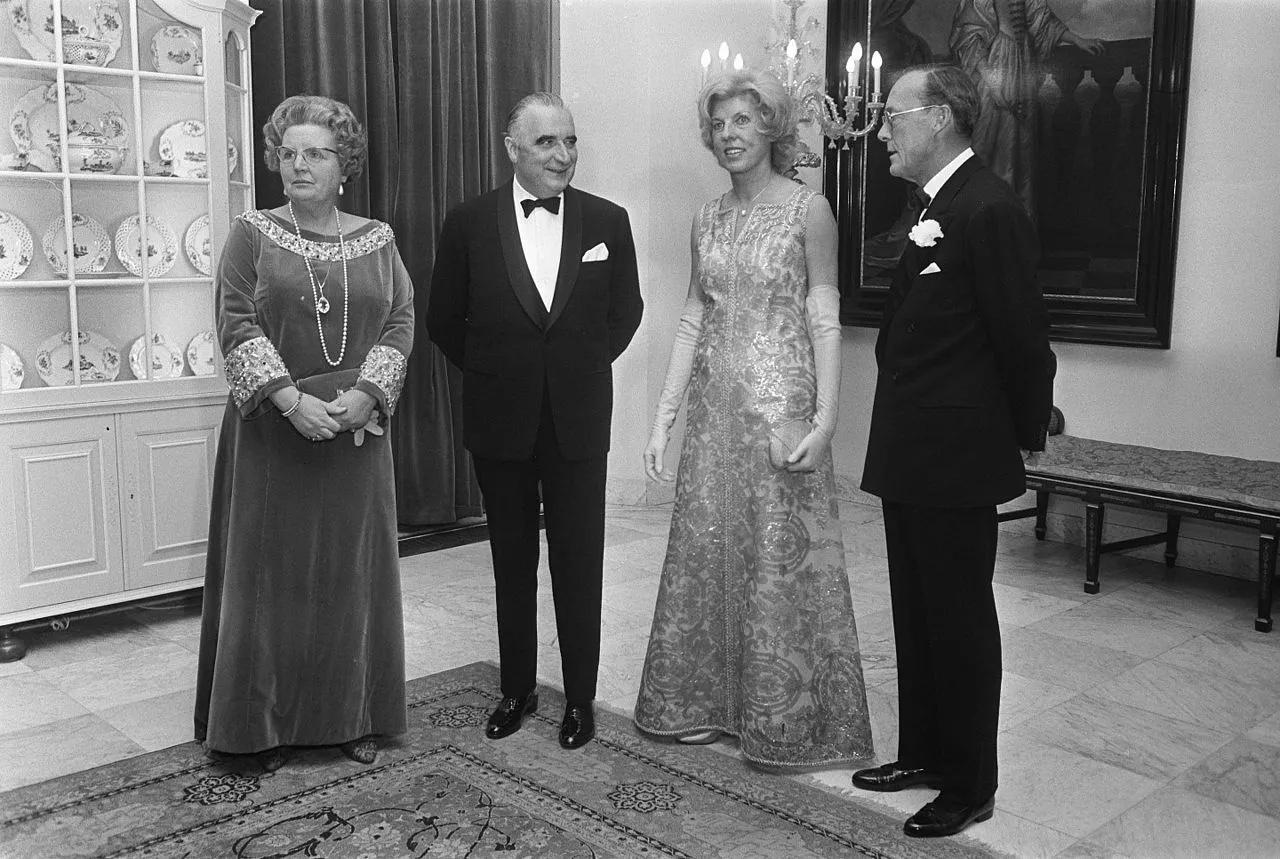
From left to right: Queen Juliana, President Pompidou of France, Mrs. Claude Pompidou-Cahour, and Prince Bernhard |
However, it was Marcantoni who was arrested, spending 11 months in custody while being questioned intensively. He was released in December 1969 through a lack of evidence. Meanwhile, the scandal broke in the press with Pompidou portrayed as a cuckold who allowed his wife to have sex at high-class orgies.
Pompidou was angling for the presidency, and the scandal threatened to completely derail his ambitions. Using the logic of “who benefits?” the former prime minister pointed the finger at the Service de Documentation Extérieure et de Contre-Espionnage (SDECE), the French intelligence services. While admitting that he and his wife had attended the parties, he denied the sex allegations and stated that the woman in the photos was a prostitute who simply looked exactly like his wife. While the claim may sound extraordinary, there is some evidence that it might be true, with Pompidou believing De Gaulle’s inner circle was to blame.
Lucien Aimé-Blanc was a French police officer from Marseille. He worked for the Narcotics Brigade and Research and Intervention Brigade, who fulfill a role similar to the FBI, dealing with organized crime, terrorism, hostage situations, and kidnappings. Aimé-Blanc had been affiliated with SDECE at the time of the Marković Affair and would claim in his memoirs that a friend asked him to find a prostitute who looked like Claude Pompidou, creating the fake images that were in Marković’s possession. How much of the story is designed to sell books is open to debate, but at the time, Delon also suggested that the police were looking to put innocent people in the frame for the killing.
Delon wrote to President Pompidou to complain of his treatment by the authorities, saying that he had been harassed, insulted, and threatened when he refused to implicate others he knew to be innocent. The letter was published in the newspaper France‐Soir, with the actor quoted as saying that one police officer had told him, “Sooner or later, you will be punished in one way or another!” And officials had stated he would be set up, with drugs planted in his luggage for a planned trip to Italy and Colombia.
The Name That Always Comes Up
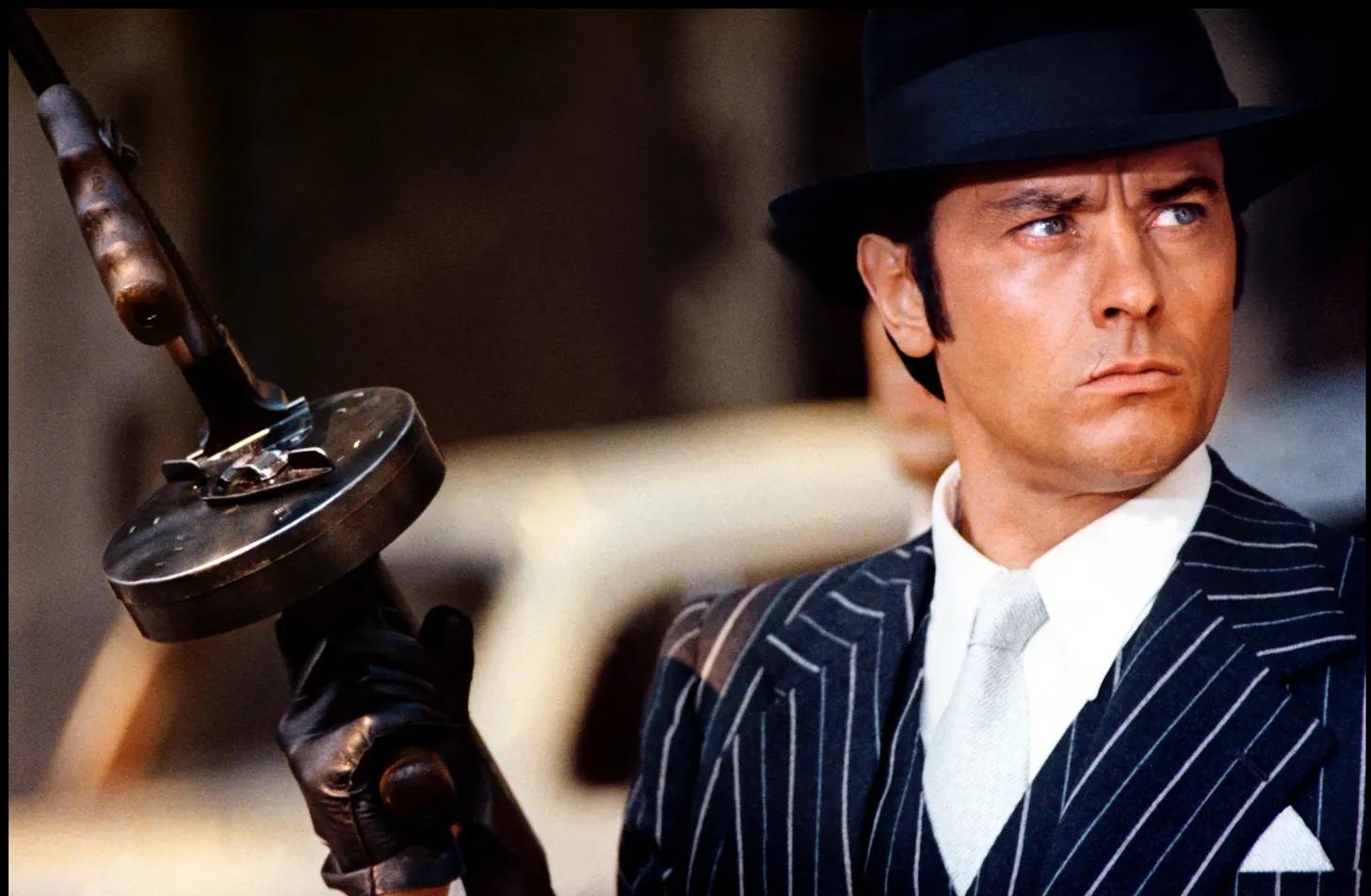
Alain Delon in Borsalino.
Who the orchestrator of the affair was has never been revealed, with details undoubtedly locked away in an SDECE vault. However, one name has always sprung out, that of Jean-Charles Marchiani. Marchiani had been recruited by the SDECE when he was just 19 years old and was a fanatical Gaullist, being known to be strongly anti-Pompidou. Marchiani just happened to be the cousin of Marcantoni.
The Marković Affair hurt Pompidou, but following the resignation of Charles de Gaulle on April 28, 1969, he defeated Christian Democrat Alain Poher by a clear margin, serving as president until he died in office in 1974. While he had been ill for some time with Waldenstrom’s disease, he died of blood poisoning caused by hemorrhoids. In his first year as President of France, he tasked Alexandre de Marenches with reforming the SDECE into the current Directorate-General for External Security (DGSE).
Delon meanwhile capitalized on the infamy that the scandal had given him and starred in yet more gangster films, including 1969’s Le clan des Siciliens and 1970’s Borsalino, both of which were big hits. He was awarded the Légion d’honneur on February 21, 1991.
The Last Loose Ends
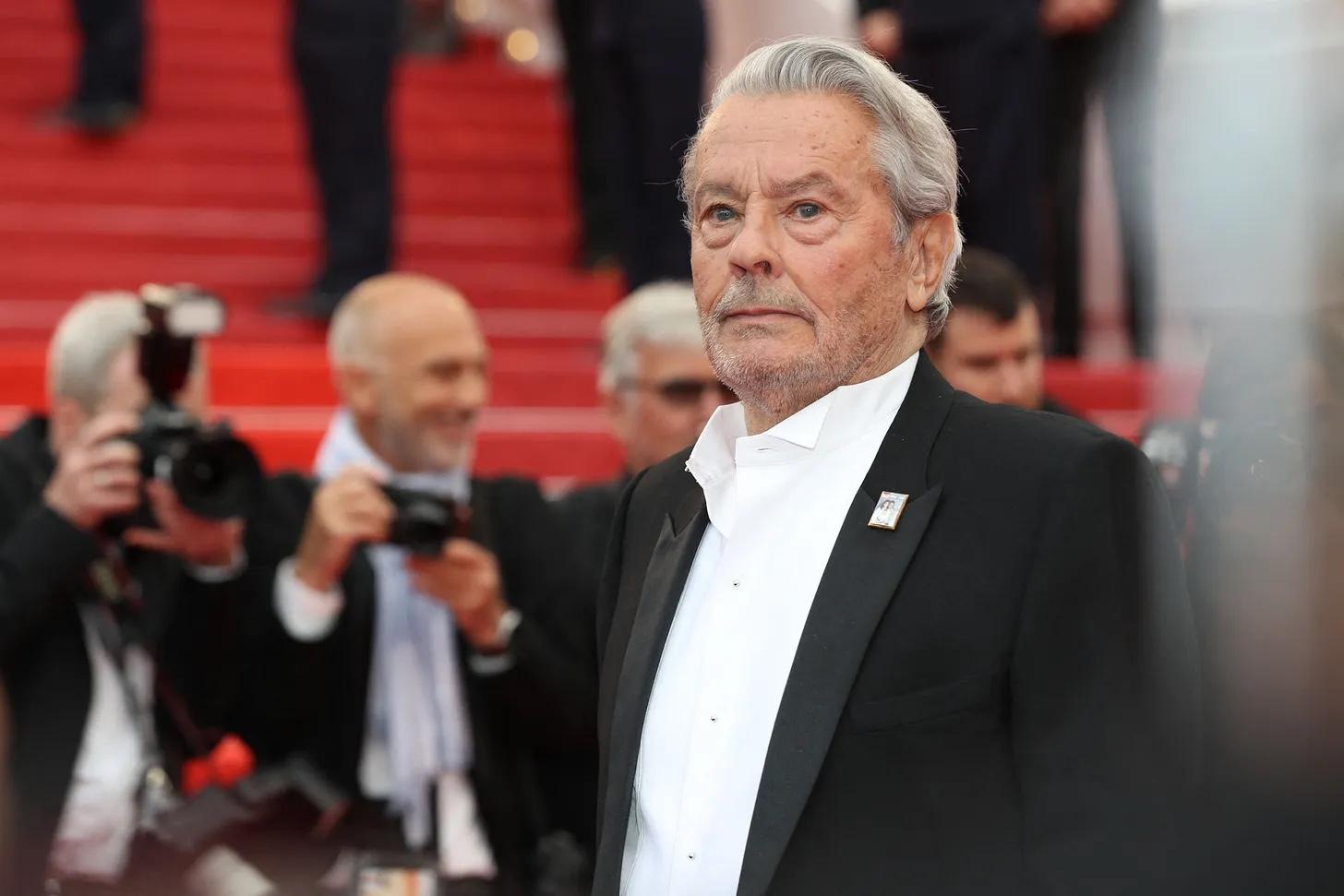
A Hidden Life (Une Vie Cachée)" during the 72nd annual Cannes Film Festival on May 19, 2019 in Cannes, France.
In 1976, police in Brussels found two dead bodies at an apartment in the city, one of them was Uroš Milićević. He had become involved in anti-Tito activity in the county, and the killing came amidst a spate of killings attributed to Yugoslavian intelligence. The other dead man was Miodrag Boskovic, an antique dealer, innkeeper, and Serbian royalist activist.
With over fifty years now gone since the killing of Stevan Marković, the truth seems unlikely to come to light anytime soon. Alain Delon is now deceased, and with him goes one of the last living names that tabloids could pin to the scandal in bold print. Whether the killing came from his circle of gangster friends, the French intelligence services, or a combination of both, there is a real sense that many in the French establishment still wish the matter would just go away. Marchiani is still alive, but he remains the kind of figure who doesn’t “clear things up” so much as outlast the questions. Either way, the Marković Affair has aged into something colder and harder: a political-era crime scene with witnesses disappearing, files staying shut, and the central corpse still doing what it did best in 1968, turning powerful men into nervous liars.
Become a Front Page Detective
Sign up to receive breaking
Front Page Detectives
news and exclusive investigations.