

The Colonial Parkway Murders and the Answers That Came Too Late for Justice

View south along Virginia State Route 132Y (Visitor Center Drive) at the junction with the Colonial Parkway in Williamsburg, Virginia
Feb. 25 2026, Published 8:18 a.m. ET


Few crimes have the power to shock more than the killing of innocent couples. From the crimes of the mysterious alleged Zodiac Killer to the ‘Son of Sam’ David Berkowitz, these killers strike at the heart of our memories of young love. All of us have memories of times full of youthful innocence and passionate energy, and the killing of these couples seems almost as if the killers are trying to strike at our own experiences. Their circumstances remind us that the victims’ lives had just begun, without opportunity for marriage, children, or a future. In 1986, a series of such killings would come to the very heart of Americana.
Colonial Parkway is a picturesque roadway and state route that links the famous Historic Triangle of Virginia. The course interlocks Yorktown, Jamestown, and Williamsburg. As such, millions of tourists visit the area each year, making it a magnet for those interested in America’s earliest history, with its numerous historic sites and scenic spots. Indeed, this is sacred ground for many Americans, inexorably linked to the birth of the nation. Yet that ground also has a stain that has yet to be wiped clean, namely the now partially unsolved and brutal killing of four young couples, one set slaughtered every year between 1986 and 1989. To add further insult to the injury, it all began on Columbus Day.
Few crimes have the power to shock more than the killing of innocent couples. From the crimes of the mysterious alleged Zodiac Killer to the ‘Son of Sam’ David Berkowitz, these killers strike at the heart of our memories of young love. All of us have memories of times full of youthful innocence and passionate energy, and the killing of these couples seems almost as if the killers are trying to strike at our own experiences. Their circumstances remind us that the victims’ lives had just begun, without opportunity for marriage, children, or a future. In 1986, a series of such killings would come to the very heart of Americana. Colonial Parkway is a picturesque roadway and state route that links the famous Historic Triangle of Virginia. The course interlocks Yorktown, Jamestown, and Williamsburg. As such, millions of tourists visit the area each year, making it a magnet for those interested in America’s earliest history, with its numerous historic sites and scenic spots. Indeed, this is sacred ground for many Americans, inexorably linked to the birth of the nation. Yet that ground also has a stain that has yet to be wiped clean, namely the now partially unsolved and brutal killing of four young couples, one set slaughtered every year between 1986 and 1989. To add further insult to the injury, it all began on Columbus Day.
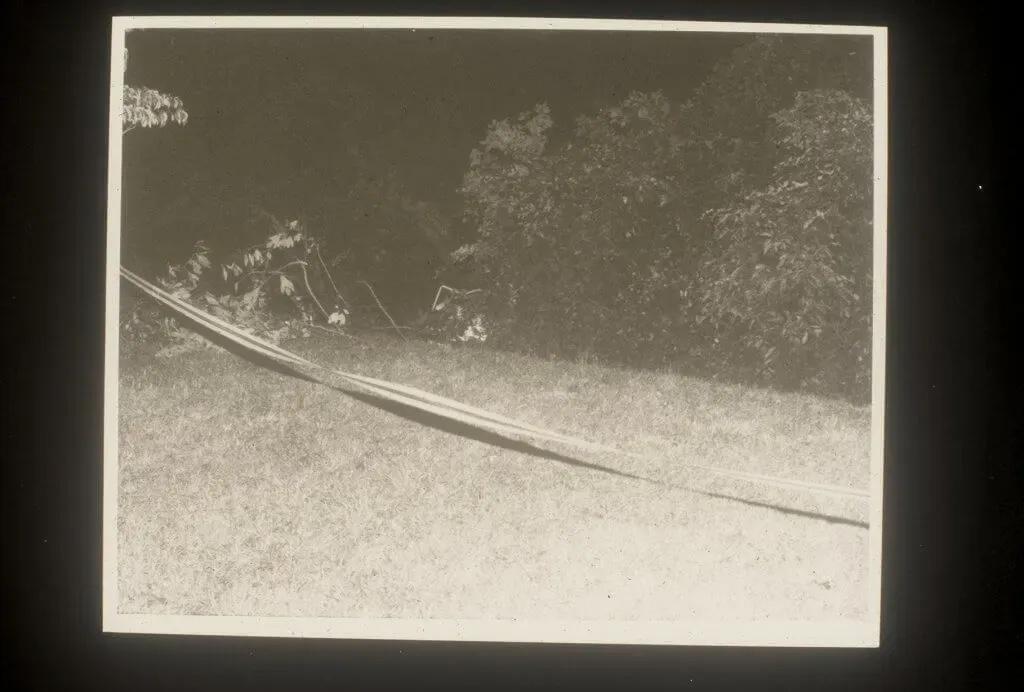
Thomas’ car down the embankment
On October 12, 1986, police reported that a car had been seen down an embankment with two bodies inside. The park rangers who were partly handling the route had been dispatched and had duly found two women inside a white 1980 Honda Civic at the Cheatham Annex Overlook in Williamsburg. Both were dead. However, this was no accident.
The car and bodies had both been doused in diesel, but it had failed to ignite. It seemed like an early lucky break, providing investigators with valuable evidence that might otherwise have been destroyed. The victims were soon identified from their ID as Cathleen Thomas, 27, and Rebecca Ann Dowski, 21, a same-sex couple reported missing three days earlier. Cathleen was a stockbroker and former Navy officer; Rebecca was a student at the College of William and Mary in Williamsburg. The two had spent most of the evening with friends at a computer lab before traveling to the Cheatham Annex Overlook for privacy. It was a regular haunt for the two, and they were often there on Thursday nights.
Their murder had been vicious, with rope burns on their wrists and necks and signs of strangulation from behind. Such was the force utilized that the coroner could not say whether the throat wounds were from the rope or a knife. Police discounted robbery as a motive, with both women’s valuables still in the car. Equally, there was no sign of sexual assault.
There was little to go on, but some theorized that the killings were the work of somebody deliberately targeting the gay community. The Colonial Parkway was a well-known spot for gay couples during this period. As a result, it was also well-known amongst anti-LGBTQ+ activists, putting the specter of a hate crime firmly on the table. Equally, Cathleen’s wallet was found on the vehicle floor, separate from her purse. She may have removed it, believing a robbery was in progress, or shown it to a perpetrator posing as a police officer. The lack of defensive wounds suggests the killer could have been further armed with a gun.
However, with the two women being widely known to be in the area on the night of their killing, it is certainly possible that the murders were a deliberate targeting. The wounds sustained by the bodies were not equal, with Cathleen Thomas suffering a much more brutal and “personal” death than her lover. Such was the brutality of her killing that she was almost decapitated. The crime seemed panicked, as if the killer had perhaps lost control of himself. There would undoubtedly have been time to drive the bodies away had the killer been thinking clearly instead of attempting to drive the car into the river. Having failed to sink the car, using diesel fuel also shows desperation and an evident lack of planning.
Suspicions that the killer was known to Cathleen Thomas have long prevailed. Still, such theories would become complicated less than a year later when there was a second double killing.
David Knobling and Robin Edwards
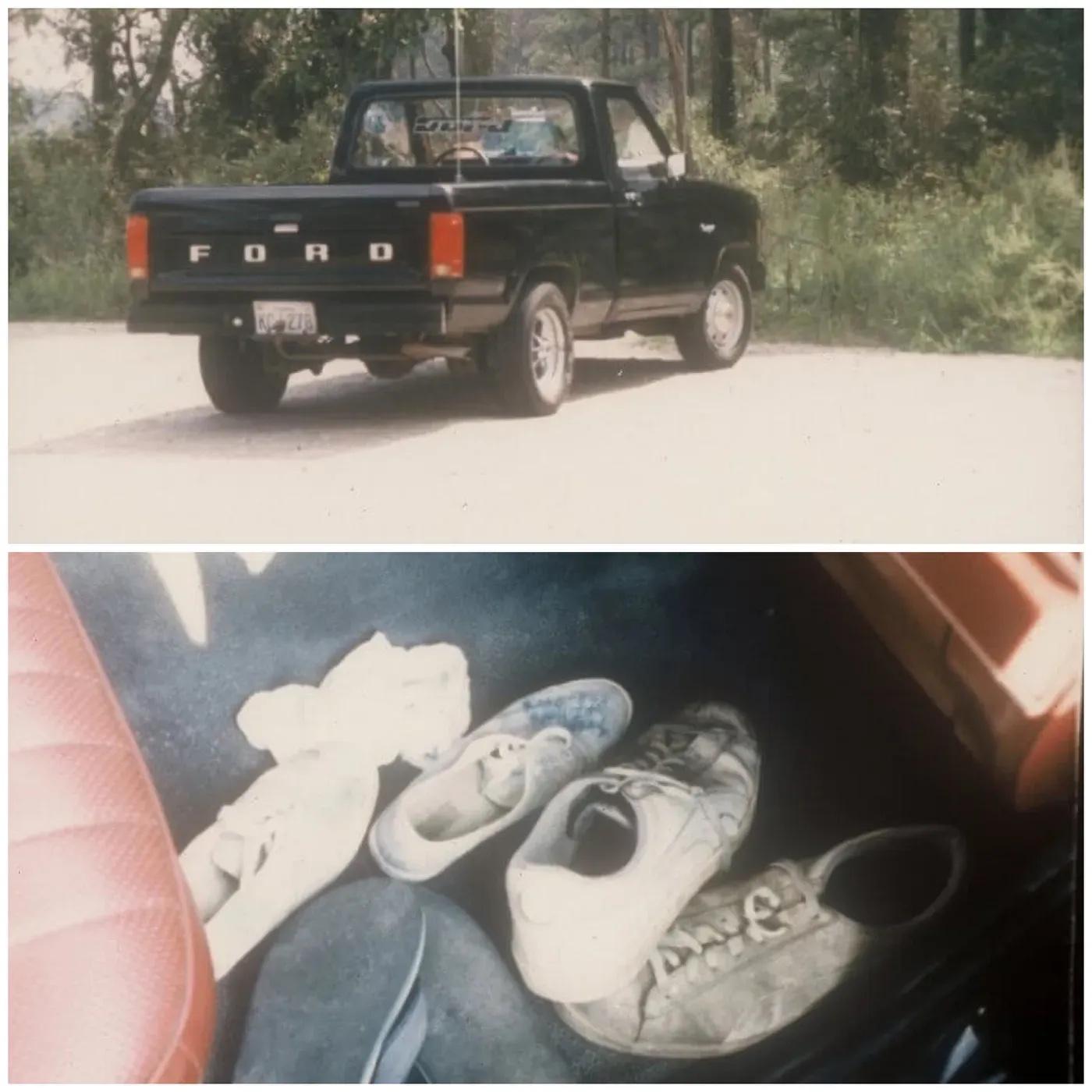
Knobling’s truck, experior and interior
Taking a trip to the Ragged Island Wildlife Refuge in Smithfield on September 20, 1987, David Knobling, 20, and Robin Edwards, 14, were not what most would call a “couple.” Robin had been the victim of child predators for some time. Her parents said she often sneaked out of the house to be with adult men, including a 21-year-old “boyfriend” when she was just 11 years old. On this occasion, she had only just met Knobling while out with friends to watch Dragnet starring Dan Aykroyd and Tom Hanks. The two decided to sneak away to Ragged Island, which had long been a popular spot for teenage couples. In his defense, it is unknown if Knobling knew exactly how young his date was. The two never returned.
After being reported missing, Knobling’s black Ford Ranger pickup truck was found with the window wound down and the wipers and radio on. Some of the couple’s clothing was also found in the vehicle, suggesting the two were surprised during sex. Nothing was missing except Edwards’ purse.
Louis Ford, a jogger, would discover the bodies three days later following an extensive hunt led by Knobling’s father. They had been marched about a mile through the marsh before both were shot. By the time investigations could begin at the crime scene, the entire area had been drenched in rain. The abundance of searchers that had passed through the area meant the site was practically destroyed. One of the prevailing theories is that the killer likely approached the vehicle and forced the couple out at gunpoint, maybe even posing as law enforcement. A link to the killings of 1986 was already there.
Richard “Keith” Call and Cassandra Lee Hailey
Just over six months later, on April 10, 1988, Richard Keith Call, 20, and Cassandra Lee Hailey, 18, were reported missing in Newport News. The couple had just been on their first date and attended a University Square party before leaving in Call’s Toyota Celica around 2 a.m. Once again, the car would be found the following day, this time at the York River Overlook on the Colonial Parkway. The vehicle was initially spotted by Call’s father, who saw the car on his way to work. Stopping, he looked inside and called out for his son, but to no avail. It was reported abandoned by the rangers at 9 a.m.
In parallel to the Ragged Island killings, clothes were found in the car alongside glasses and a watch. This led rangers to initially suspect the two had simply gone skinny-dipping in the river, with both of the couple’s underwear among the items. However, the theory would be discounted considering the temperature and location, with many better spots nearby. Indeed, the car’s condition was eerily similar in almost every respect to the murders a year before, except that Cassandra’s wallet was missing. Strangely, Richard’s was still there. Like previously, it seems possible the two were also interrupted during intimacy by an assailant and then forced from their vehicle. However, while David Knobling and Robin Edwards’s bodies were found a few days later, having been trekked for a mile, no trace of either Call or Hailey was ever found.
Whether the killing of Call and Hailey was related to the others became a matter of enormous contention, with some insisting that the crime scene makes a case for a link to the murders of Knobling and Edwards. While the killer in that case only walked his captives for a mile, it seems possible that his MO developed between the killings, and the duo was taken elsewhere. However, the lack of bodies would be unique in this case, and an impending fourth set of killings would seemingly show a reversal of that change.
Daniel Lauer and Annamaria Phelps
- The Alphabet Murders: Did a Killer Prey on 3 Girls in New York Because of How They Spelled Their Names?
- Savage Attack & Disturbing Letters: Was the Death of Cheri Jo Bates the Zodiac Killer's First Murder?
- 4 dead kids, 1 sex-trafficking ring: Are these Detroit area murders in the 70s connected to 'Pedophile Island'?
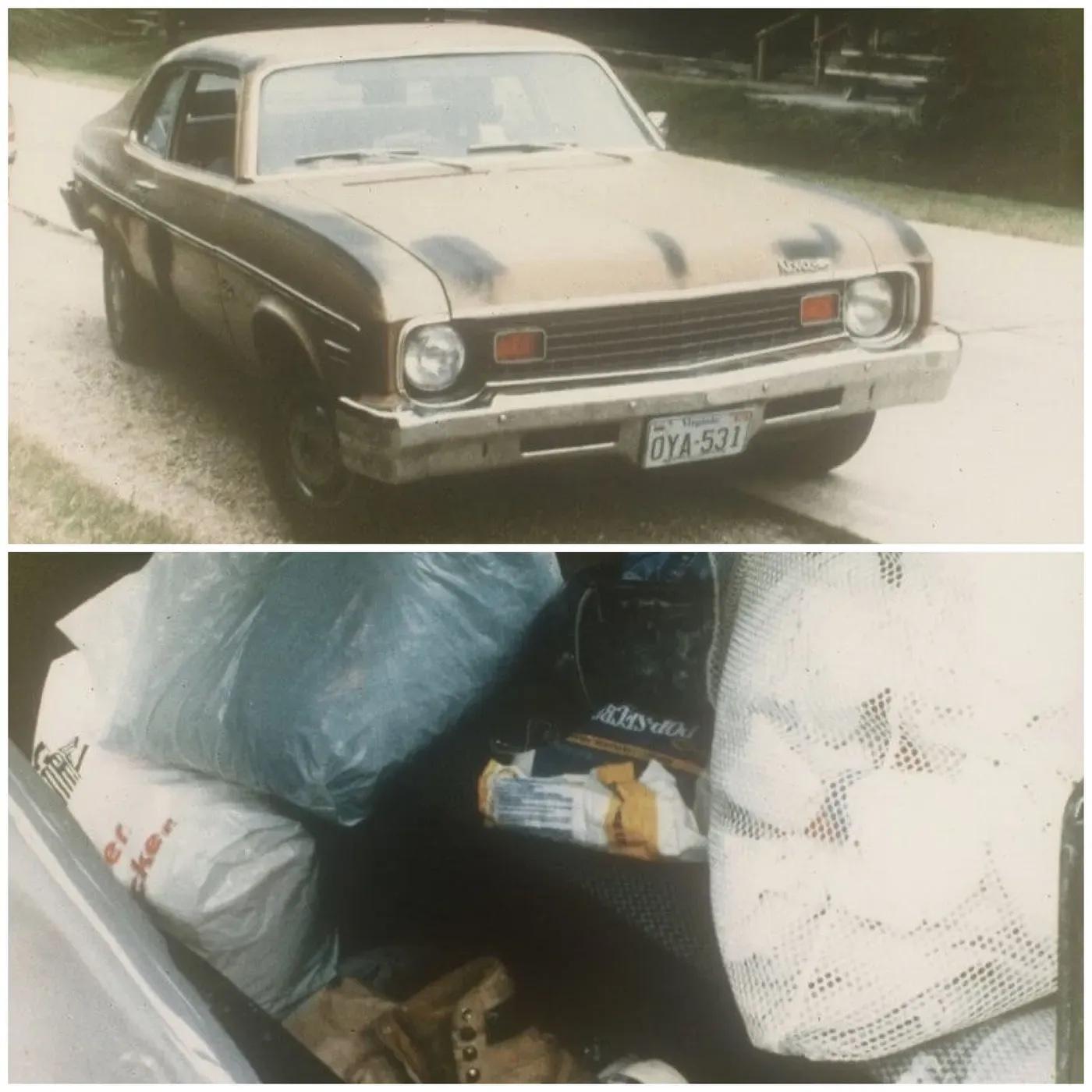
Lauer’s truck, experior and interior
Just after Labor Day 1989, Daniel Lauer, 21, and Annamaria Phelps, 18, would also vanish into thin air while traveling toward Virginia Beach, where Lauer intended to start a new life. The pair weren’t a couple; Annamaria was actually in a relationship with Daniel’s brother, but the two lived together and had persuaded Daniel to move in with them. They set out from Amelia County on September 4 and began the journey in an easterly direction. They would never be seen alive again.
Once again, the car would be found first. Lauer’s 1972 Chevrolet Nova was discovered abandoned by a state trooper at a New Kent rest stop on I-64 before either of the pair was even reported missing. Strangely, the vehicle was found to have been traveling away from the duo’s intended destination on the westbound side of the highway. The car was full of Lauer’s possessions that he’d been taking to Virginia Beach with him, yet a blanket was missing, as was Phelps’s wallet.
What happened to the pair would become frighteningly clear on October 19, when two bow hunters discovered the skeletonized bodies of the couple. They were on a woodland logging road off the interstate between Richmond and Williamsburg, about three miles from the rest stop. The remains were covered with the missing blanket. The decomposition was so advanced that no cause of death could be ascertained for Lauer, with Phelps said to have suffered knife wounds. While the pair weren’t a couple, any likely killer wouldn’t have known that as they traveled together, he likely assumed that any young man and woman traveling alone must be an item.
More Victims?
In 1996, some believe the Colonial Parkway Killer struck again. Julianne “Julie” Williams, 24, and Lollie Winans, 26, had been on a backpacking adventure to Shenandoah National Park. They were a couple and had brought along their dog, Taj. On May 19, the pair pitched their tent in a picturesque location just off a horse trail near a mountain stream. They never returned.
By May 31, the alarm was raised about their disappearance when Julie’s father, Thomas, contacted the police. The couple’s car was soon found, as was Taj, running free from his leash. The next day, the bodies of Julie and Lollie were found bound and gagged with duct tape. They had been partially undressed, and their throats were slit with immense violence, almost to the point of decapitation. Despite the undressing, there was no evidence of sexual assault.
There are obvious similarities with the Colonial Parkway killings, particularly those of Cathleen Thomas and Rebecca Dowski. Yet there are also significant differences. The Shenandoah victims were tied up and undressed, and this couple wasn’t initially confronted in their car. The double homicide is also the only one with a known suspect, Darrell Rice.
Just a year later, Rice attempted to abduct and run over Canadian tourist Yvonne Malbasha on Skyline Drive, with restraints being found in his vehicle. Subsequent investigations showed he had been in the park during the period when Julie and Lollie were likely killed. Interviews with the suspect raised concerns for investigators.
In 2001, Rice was indicted for the two Shenandoah murders, with significant evidence to show that the suspect was sexually disturbed and deeply homophobic. However, in 2003, a hair found at the crime scene failed to match Rice’s DNA, and the case fell apart, and the suspect was dismissed without prejudice.
Serial Killer or Separate Killings?
There are startling similarities involved with all of the 1986–1989 killings, yet also significant differences. All the Colonial Parkway-area killings took place in the same general geographical region. All were against couples or those likely perceived as couples. They all involved a possible ambush in a vehicle, and all were carried out without struggle or witnesses. Likewise, they all happened at night and during weekends or holidays.
Three of the cases involve the victims being removed from the ambush location. In the latter three cases, the female victim was deprived of her wallet (the killer likely took Robin Edwards’ entire purse). Nothing else was stolen, and it’s possible these items were trophies. However, the methodology differed throughout. Strangling and throat-slashing, shooting, and stabbing were all utilized across the killings.
The bodies were not found in the Richard Call and Cassandra Hailey case. In the Cathleen Thomas and Rebecca Dowski case, they were left in the car. This changing MO consistently wrong-footed investigators. And with all of the victims coming from different demographics, including different ages, backgrounds, and sexual orientations, profiling a single offender was complex. However, if a serial killer was at work, there were certainly enough clues to provide a likely overview.
Perpetrators targeting couples is an often-uncommented phenomenon within serial killings, with the Zodiac Killer, Texarkana Phantom, Washington “Tube Sock” Killer, and Son of Sam being just a few examples. Couples in vehicles parked for sexual intercourse will choose the most private locations, not wishing to be caught. These locations place them in danger from predators who have to make little effort to ensnare their prey, and the victims instead come straight to him and often are in a compromising position that makes them vulnerable. Psychologically, the reasons can be varied. Some may believe themselves moral crusaders, raging against homosexuality, underage sex, or merely premarital sex in general. Others may hold a grudge against young couples who have suffered rejection. Some simply enjoy seeing the lovers’ reactions as their significant other is killed or tortured.
Police theorized early on that the killer might have first approached the victims in some form of uniform. Then, he could get them to pull down their windows and possibly check their licenses, which would have been in their wallets. Notably, at some crime scenes, wallets were either missing or found in unusual positions, as if they had been hastily handled during a “traffic stop.” Once the window was open, he likely pulled a gun and, taken in by the professional procedure, the couple complied with exiting the vehicle, believing they were being arrested. However, this line of suspicion would be equally valid if the culprit were impersonating a police officer. In fact, one prominent individual who came under early suspicion was a law enforcement officer.
Fred Atwell was a deputy sheriff in Virginia during the initial 1986–89 span of the canonical killings. His intense interest in the case and zealous desire to insert himself into the investigations began to raise suspicions around 2010. Atwell would reject the theory that he was involved, and before he died in 2018, he claimed that anyone linking him to the case was doing so out of revenge. Atwell had made himself a hero to some and a traitor to others when he uncovered leaked crime scene photographs from the FBI office in Norfolk, blowing the whistle and placing the FBI under scrutiny. Ultimately, no evidence ever concretely tied Atwell to the murders, and he has since been largely dismissed as a suspect by investigators.
That said, the theory of a single serial killer was not universally accepted for many years. In 2010, famed former homicide detective Steve Spingola was tasked by the victims’ families with investigating the killings in a private capacity. Spingola’s conclusion was controversial in that the retired detective believed that not all the killings were connected. He pointed out the significant differences in the Thomas/Dowski killing versus the later ones, suggesting that the motive in the first case had been personal hatred, perhaps an anti-gay hate crime, possibly linking it to the 1996 Shenandoah murders of Julie Williams and Lollie Winans. However, Spingola didn’t believe the first Colonial Parkway double homicide was connected to the others along the Parkway.
During his investigation, Spingola also received a note from Annamaria Phelps’ sister-in-law that had been found among Annamaria’s possessions. The undated note, found years after the crime, came from Phelps’ apartment and had been written just before she set out with Daniel Lauer for Virginia Beach. It stated that they were going to meet somebody at a rest stop who drove a blue van. While Spingola hasn’t publicly revealed the name on the note, he concluded that it indicated Phelps and Lauer may have been lured into a robbery or foul play by someone they intended to meet, a scenario that could point to a different culprit than the one who stalked Colonial Parkway lovers.
The Colonial Parkway murders remain a deep wound in America’s historic core, and the lack of clarity has merely added to the pain. Some believe that all the killings were the work of one man; others have argued that only some of the murders were linked, or even that none were connected at all. For decades, whether police were looking for one killer or four, the case remained officially active, with new tips still coming in every week. In 2018, authorities stated that they had obtained potential DNA from some of the crime scenes, raising hopes that scientific advances could finally crack the mystery. While 35+ years had passed since the first murders, investigators held out hope that emerging technologies or just a single piece of information might yet turn the Colonial Parkway case on its head.
DNA Breakthrough and a Suspect Identified
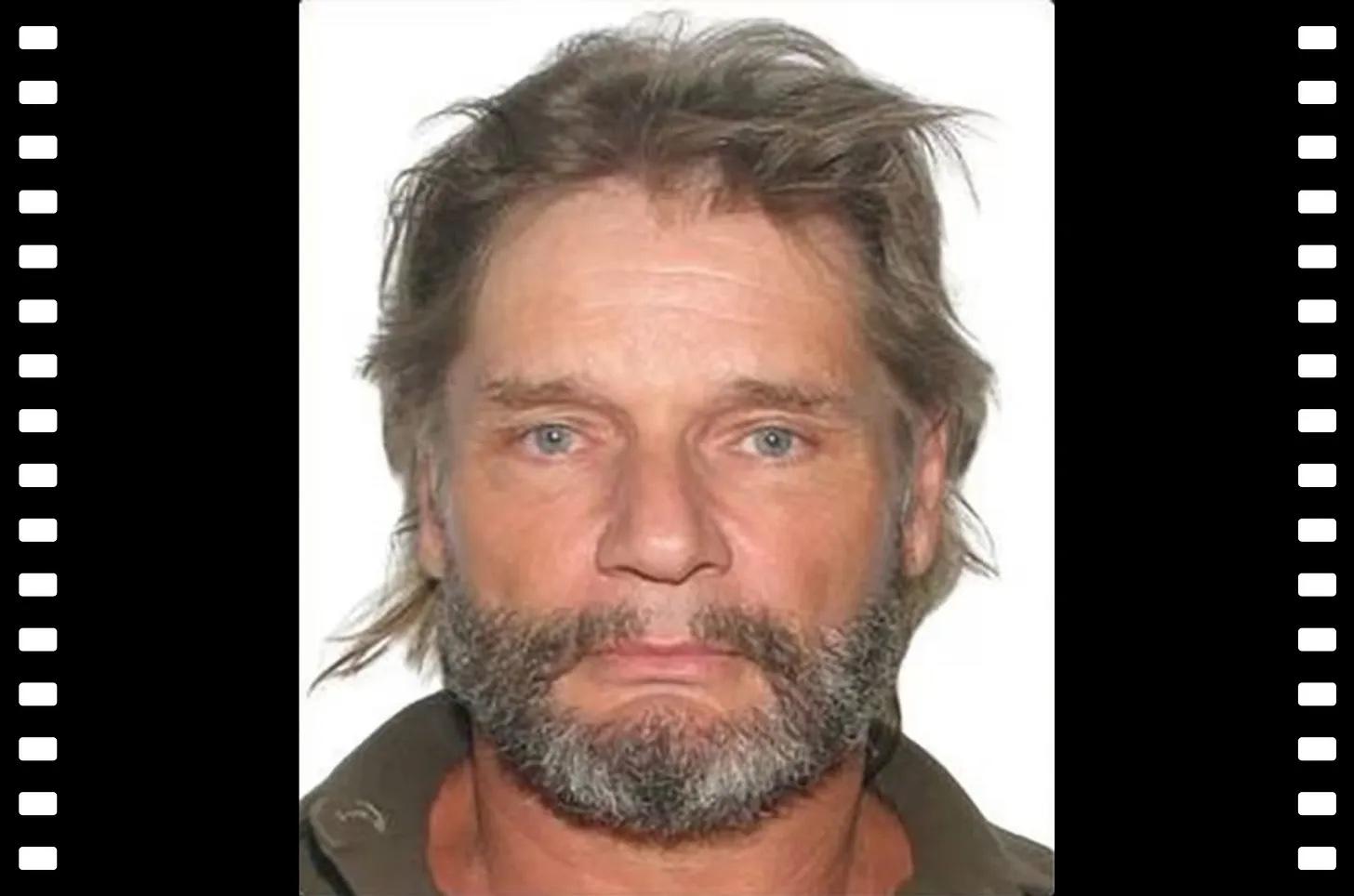
Alan Wilmer Snr
Those hopes were not in vain. In recent years, persistent investigation and breakthroughs in forensic science have finally provided a dramatic lead. By 2024, investigators had matched DNA evidence from several Colonial Parkway-related crime scenes to a single suspect. Alan Wade Wilmer Sr., a 63-year-old former waterman from Virginia’s Northern Neck who died in 2017, was tied through genetic genealogy and laboratory analysis to at least three of the slayings. Authorities announced that his DNA matched evidence from the 1987 murders of David Knobling and Robin Edwards at Ragged Island and the July 1989 rape and strangulation of 29-year-old Teresa “Teri” Lynn Spaw Howell in nearby Hampton. Then, in early 2026, the FBI’s Norfolk Field Office revealed that forensic evidence also connected Wilmer to the very first Colonial Parkway crime, the October 1986 double murder of Cathleen Thomas and Rebecca Dowski. Federal prosecutors affirmed that, had Wilmer been alive, the accumulated evidence would have been sufficient to charge and prosecute him for these murders. In effect, law enforcement now considers Alan Wilmer Sr. the likely serial killer behind the Colonial Parkway murders.
Alan Wilmer Sr. had, in fact, been on investigators’ radar from very early on. Unbeknownst to the public, he was described as “Suspect Number One” in the disappearance of Keith Call and Cassandra Hailey back in 1988. Wilmer was an aggressive prowler along the Colonial Parkway in the 1980s, and he drove a distinctive blue 1966 Dodge pickup truck with vanity plates reading “EM-RAW.” This odd plate (his surname, WARM, spelled backwards) was well-known to locals and the FBI. In fact, just four days after Keith and Cassandra vanished, agents observed Wilmer frantically repainting and scrubbing down that truck. Fearful that he was destroying evidence, the FBI obtained a warrant and searched his trailer, but they did not find anything definitive tying him to the missing couple. Wilmer even passed an FBI-administered polygraph test and, due to a lack of hard evidence, was ultimately cleared at that time. In hindsight, this allowed a prime suspect to slip through the cracks.
Who exactly was Alan Wade Wilmer Sr.? In many ways, he blended into the Tidewater community. Wilmer had no felony criminal record, meaning his DNA profile was never on file in any national database. A lifelong outdoorsman, he made his living on the Chesapeake Bay as a commercial fisherman and oyster farmer, and at one point, he ran a tree-trimming business called “Better Tree Service”. During the 1980s, he often lived aboard a small workboat he owned, docking at marinas across the Northern Neck, Middle Peninsula, and Hampton Roads. He was also a member of at least one regional hunt club and was an avid hunter familiar with the rural terrain. Standing about six feet tall and 165 pounds, Wilmer likely cut an unremarkable figure in that region, just another lean waterman hauling nets or a hunter in camouflage. But investigators now believe this ordinary façade masked a predator. His way of life gave him intimate knowledge of the isolated pull-offs, logging roads, and waterways where many of the victims were last seen or found. He knew the land and water by heart, and he may have used that familiarity, perhaps even posing as a law enforcement or park official, to approach and disarm his victims with little suspicion.
Crucially, it was DNA from the crime scenes that finally unmasked Wilmer as the killer. Forensic evidence left at the Knobling-Edwards scene (Robin Edwards had been sexually assaulted, which yielded a DNA profile) was matched to DNA recovered from the Teresa Howell murder, indicating the same perpetrator. Armed with this clue, authorities turned to genetic genealogy techniques to identify the source of that DNA. By late 2023, their genealogical research pointed squarely to Wilmer Sr. as the likely suspect. Since Wilmer was already deceased, investigators obtained a direct DNA sample from his remains (or personal effects) to confirm the match. In 2023, the Virginia Department of Forensic Science issued a formal Certificate of Analysis confirming that Wilmer’s DNA profile matched the suspect DNA from both the 1987 Ragged Island double murder and the 1989 Howell case. This genetic evidence was the smoking gun that the Colonial Parkway task force had sought for decades.
With Alan Wilmer Sr. now identified, the Colonial Parkway murders task force is cautiously closing in on the full truth. In November 2025, Virginia authorities announced that Wilmer’s DNA had also been linked to a fourth victim: 18-year-old Laurie Ann Powell. Powell was a Gloucester teen who vanished in March 1988; her body was found weeks later in the James River, not far from where Knobling and Edwards were discovered. She had been stabbed multiple times. Though Powell’s case wasn’t originally counted among the “Parkway murders,” her inclusion now further solidifies the pattern of a cluster of young victims in the late 1980s all traced back to the same man. Investigators have also publicly stated that Wilmer is strongly suspected in the disappearance of Keith Call and Cassandra Hailey. As for the last of the four canonical double-homicides, the 1989 murders of Annamaria Phelps and Daniel Lauer, officials have not yet announced a DNA link. But they have not ruled out Wilmer’s involvement in that case, and are actively investigating any connections. With his face and name now known, they hope that new witnesses or information might emerge tying Wilmer to all of the Colonial Parkway murders.
For the families of the victims, the identification of Alan Wade Wilmer Sr. brings a bittersweet form of closure.
Wilmer’s death in 2017 means he will never answer for his crimes in a courtroom, nor reveal firsthand why he committed such atrocities. The families must carry on without the full story, denied the chance to see a conviction. Equally, skepticism remains. In fact, even today some investigators and family members question whether Wilmer acted alone. In the 1990s, a Virginia State Police behavioral analyst publicly argued the control and brutality suggested two killers working together, and an FBI official at the time also thought a pair may have been involved. In 2025, Bill Thomass, Cathleen Thomas’s brother, tated on a podcast, “I’m fairly certain that [Wilmer] did not act alone,” reflecting a long-held view that more than one person may have shared the secret . The official word is that not all cases are closed: FBI Norfolk says this resolution affects the 1986 case but makes clear that “the work is not finished” on the other unsolved incidents . Authorities emphasize that every tip and piece of evidence will be pursued.
Still, knowing the killer’s identity has brought some peace. Bill Thomas summed up the development by saying that while the outcome is not a celebration, it is a resolution – “It’s not happy. But it’s satisfying”.
While the full story may not yet be known, families finally know who was responsible for the loss of their loved ones.
“For 36 years, our families have lived in a vacuum of the unknown… Now, we have a sense of relief and justice knowing that he can no longer victimize another,” the Knobling and Edwards families said in a joint statement after Wilmer was named.
The FBI are now meticulously reconstructing Wilmer’s movements and possible encounters during the 1980s. As part of this effort, officials have reached out to the public for help. They urge anyone who worked, socialized, or hunted with Wilmer, or who saw his blue truck or fishing boat in suspicious circumstances, to come forward with information. After nearly four decades, the Colonial Parkway murders may finally be solved, but ensuring every victim’s story is fully told remains a priority. The hope is that by learning everything possible about Wilmer’s methods and motives, authorities can bring the last lingering facts to light and properly close one of Virginia’s most notorious cold cases.
In the end, it is never too late for justice, even delayed justice, for the families of eight innocent victims whose lives were cut short. The Colonial Parkway will always be a place of scenic beauty and historical significance, but it will also forever carry the memory of those tragic nights. With the killer finally identified, that chapter of darkness in the Historic Triangle’s lore can begin to find its long-awaited resolution. The legacy of the Colonial Parkway murders will live on, not just as a chilling cautionary tale, but as a testament to the perseverance of investigators and families who refused to forget. Through their relentless pursuit, a murderer was unmasked, and the spirits of the young couples lost on those moonlit Virginia nights can hopefully rest a little easier.
Become a Front Page Detective
Sign up to receive breaking
Front Page Detectives
news and exclusive investigations.